
Sermorelin is a bioidentical synthetic analog of growth hormone-releasing hormone consisting of the first 29 amino acids of naturally occurring GHRH. Originally developed in the 1980s, this peptide was designed to stimulate the pituitary gland’s natural production of growth hormone rather than introducing external HGH into the body. Unlike direct HGH therapy, Sermorelin works by encouraging the body’s own regulatory mechanisms, making it a safer and more physiologically appropriate option for hormone optimization.
The peptide is officially known as Sermorelin acetate and is sometimes referred to as GRF 1-29 (Growth Hormone Releasing Factor 1-29). It contains the active portion of GHRH that is responsible for binding to growth hormone-releasing hormone receptors in the anterior pituitary gland. This selective action makes Sermorelin particularly effective at restoring natural growth hormone production patterns that decline with age.
How Sermorelin Works?
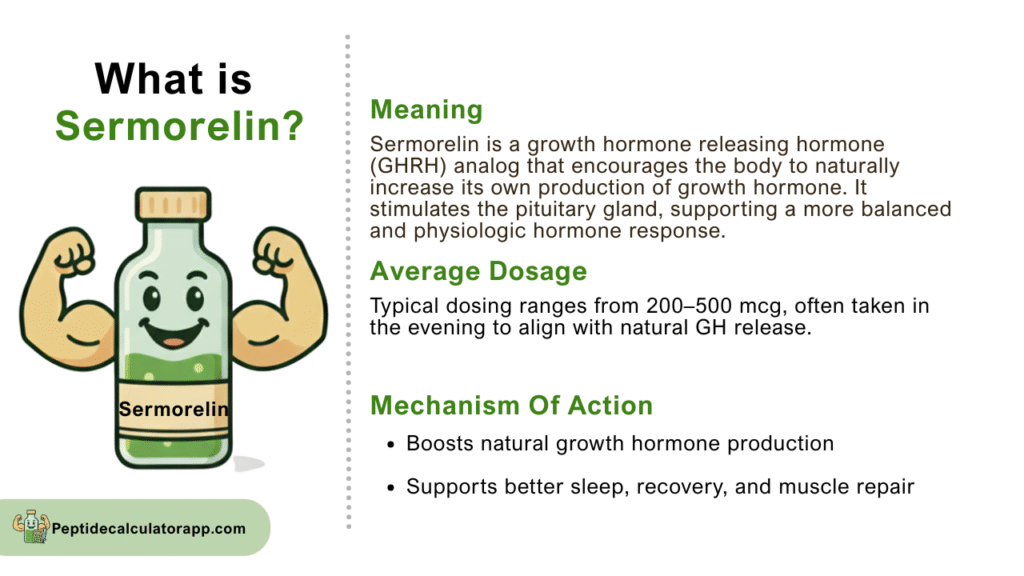
Sermorelin functions by mimicking the action of naturally occurring GHRH in the hypothalamus. When administered, it binds to specific GHRH receptors located on somatotroph cells within the anterior pituitary gland. This binding triggers a cascade of cellular events that ultimately leads to the synthesis and release of growth hormone.
The mechanism involves the activation of adenylyl cyclase, which increases cyclic adenosine monophosphate (cAMP) levels within the cell. This elevation in cAMP activates protein kinase A, which then phosphorylates the cAMP response element-binding protein (CREB). Activated CREB enhances the transcription of growth hormone genes, leading to increased growth hormone production and secretion.
What makes Sermorelin particularly valuable is its ability to preserve the body’s natural feedback mechanisms. Unlike exogenous HGH, which can suppress natural production, Sermorelin maintains the normal pulsatile release pattern of growth hormone and respects the body’s natural regulatory systems, including somatostatin-mediated inhibition.
Benefits of Sermorelin
Sleep Quality and Recovery
Sermorelin therapy is widely recognized for its positive effects on sleep quality. By stimulating the natural release of growth hormone, it enhances deep sleep stages and helps restore healthy sleep architecture. This improvement in restorative sleep often translates into better daily energy levels and faster recovery from physical stress or strenuous exercise.
Body Composition Improvements
Many individuals experience notable changes in body composition. Sermorelin can help increase lean muscle mass while simultaneously reducing body fat. These effects make it a valuable tool for fitness enthusiasts, athletes, and individuals pursuing long-term health optimization.
Cognitive and Mood Benefits
Sermorelin has been associated with enhanced cognitive performance, including improved mental clarity, sharper memory, and more stable mood patterns. These benefits are linked to the critical role growth hormone plays in neurological health and brain function.
Cardiovascular and Metabolic Support
The peptide may also contribute to better cardiovascular health by improving lipid profiles and supporting optimal cardiac function. Additionally, improved metabolic balance can further enhance overall well-being.
Dosage and Administration
Sermorelin is typically administered via subcutaneous injection, usually in the evening before bedtime to align with the body’s natural growth hormone release patterns. The standard dosage ranges from 0.2mg to 0.5mg per day, though individual requirements may vary based on factors such as age, body weight, and specific therapeutic goals.
Most protocols recommend starting with a lower dose, typically 0.2mg, and gradually increasing based on individual response and tolerance. The injection is commonly administered in areas with adequate subcutaneous tissue, such as the abdomen, thigh, or upper arm. Rotation of injection sites is recommended to prevent lipodystrophy and maintain optimal absorption.
Treatment cycles typically last 3-6 months, followed by a break period to assess natural hormone production recovery. Some practitioners recommend longer-term use with periodic monitoring of IGF-1 levels and other biomarkers to ensure optimal therapeutic outcomes without adverse effects.
Storage and Stability
Proper storage of Sermorelin is crucial for maintaining its potency and effectiveness. The lyophilized (freeze-dried) powder should be stored in the refrigerator at temperatures between 2-8°C (36-46°F) and protected from light. Under these conditions, unopened vials can remain stable for up to two years from the manufacturing date.
Once reconstituted with bacteriostatic water, the solution must be refrigerated and used within 30 days for optimal potency. The reconstituted solution should appear clear and colorless; any cloudiness or discoloration indicates degradation and the solution should be discarded.
During transport or temporary storage, Sermorelin can tolerate room temperature for short periods, but prolonged exposure to heat or freezing temperatures should be avoided. Always use sterile technique when handling and preparing the solution to prevent contamination.
Potential Side Effects
Injection Site Reactions
Sermorelin is generally well-tolerated, and the most common side effects occur at the injection site. Mild redness, swelling, or discomfort may develop shortly after administration. These reactions usually resolve within a few hours to days and can often be reduced with proper injection technique and rotation of injection sites.
Mild Systemic Effects
Some users may experience headaches during the early stages of treatment as the body adapts to increased growth hormone production. A brief sensation of flushing or warmth may also occur immediately after injection, though this typically fades quickly and does not require intervention.
Less Common Reactions
In rare cases, individuals may notice nausea, dizziness, or a sense of restlessness or hyperactivity. These effects are usually related to higher doses and can often be managed by adjusting the dose or timing of administration. Because Sermorelin stimulates the body’s natural growth hormone release rather than providing synthetic HGH, it is far less likely to cause joint discomfort, fluid retention, or edema, making it a safer option for long-term use.
FAQs
Q1. How long does it take to see results from Sermorelin therapy?
Ans: Most individuals begin to notice improvements in sleep quality and energy levels within the first 2-4 weeks of treatment. Significant changes in body composition, muscle mass, and other physical benefits typically become apparent after 3-6 months of consistent use.
Q2. Is Sermorelin legal and safe for long-term use?
Ans: Sermorelin is FDA-approved for treating growth hormone deficiency and is considered safe for long-term use when properly monitored by healthcare professionals. Regular monitoring of IGF-1 levels and other biomarkers helps ensure optimal therapeutic outcomes.
Q3. Can Sermorelin be combined with other peptides?
Ans: Yes, Sermorelin is often used in combination with other peptides for synergistic effects. It’s commonly paired with GHRP-2, GHRP-6, or Ipamorelin to enhance growth hormone release. Some protocols also include peptides with different mechanisms of action for comprehensive health optimization.
Q4. What’s the difference between Sermorelin and HGH?
Ans: Sermorelin stimulates the body’s natural production of growth hormone, while HGH provides external hormone replacement. Sermorelin maintains natural regulatory mechanisms and has fewer side effects, while HGH provides more immediate but potentially less sustainable results.
Q5. Do I need a prescription for Sermorelin?
Ans: Yes, Sermorelin requires a prescription from a licensed healthcare provider. Proper medical evaluation, including hormone testing and health assessment, is necessary before beginning treatment to ensure safety and appropriateness.
Final Thoughts
Sermorelin represents a sophisticated approach to growth hormone optimization that respects the body’s natural regulatory mechanisms while providing significant therapeutic benefits. Its ability to stimulate endogenous growth hormone production makes it an attractive alternative to direct HGH therapy, offering a safer and more physiologically appropriate option for individuals seeking hormone optimization.
The extensive research supporting Sermorelin’s efficacy, combined with its favorable safety profile, makes it a valuable tool in anti-aging medicine and hormone replacement therapy. When properly administered under medical supervision, Sermorelin can provide significant improvements in quality of life, body composition, and overall health markers.
As with any therapeutic intervention, success with Sermorelin requires proper medical oversight, appropriate dosing protocols, and realistic expectations about treatment outcomes. The decision to pursue Sermorelin therapy should always be made in consultation with qualified healthcare professionals who can assess individual needs and monitor treatment progress effectively.