
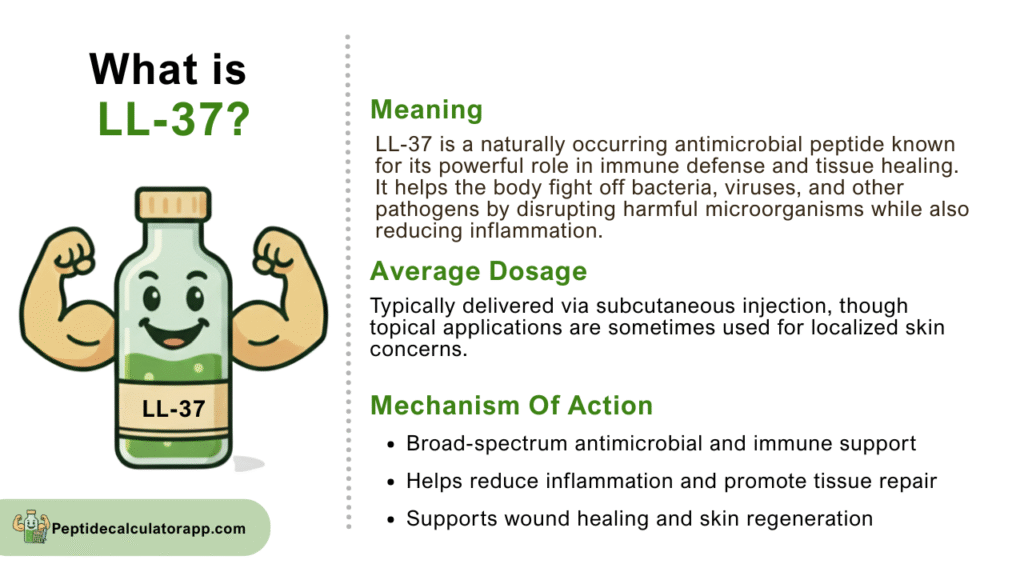
LL-37 (Cathelicidin) is a naturally occurring antimicrobial peptide that belongs to the cathelicidin family of host defense peptides. The name “LL-37” derives from its 37 amino acid sequence that begins with two leucine residues. This peptide is derived from the C-terminal portion of human cathelicidin antimicrobial peptide (hCAP18), which is processed by the enzyme proteinase-3 to release the active LL-37 fragment.
This peptide is primarily produced by neutrophils, epithelial cells, and other immune cells throughout the body. LL-37 serves multiple functions beyond its antimicrobial properties, including wound healing, immune modulation, and angiogenesis. Its broad spectrum of activity makes it a subject of intense research interest, particularly in the development of new therapeutic approaches for various conditions.
How LL-37 Works?
The mechanism of action of LL-37 (Cathelicidin) is multifaceted and involves several key processes. Primarily, LL-37 exerts its antimicrobial effects through direct interaction with microbial cell membranes. The peptide’s cationic nature allows it to bind to negatively charged bacterial cell walls, leading to membrane disruption and ultimately cell death.
Beyond its direct antimicrobial action, LL-37 demonstrates immunomodulatory properties. It can stimulate immune cell chemotaxis, promoting the recruitment of neutrophils, monocytes, and T-cells to sites of infection or inflammation. The peptide also enhances phagocytosis and can modulate cytokine production, helping to balance inflammatory responses.
LL-37 also plays a significant role in wound healing through its ability to promote angiogenesis and epithelial cell migration. It stimulates the release of growth factors and can directly interact with various cellular receptors to promote tissue repair and regeneration processes.
Benefits of LL-37 (Cathelicidin)
Broad-Spectrum Antimicrobial Protection
LL-37 offers extensive antimicrobial benefits, functioning effectively against bacteria, viruses, fungi, and some parasites. This broad-spectrum activity makes it a valuable therapeutic option for reducing infection risk and supporting immune defenses across various health conditions.
Effectiveness Against Antibiotic-Resistant Infections
One of the most significant advantages of LL-37 is its potential role in combating antibiotic-resistant pathogens. Unlike traditional antibiotics, LL-37 uses multiple mechanisms to disrupt harmful microorganisms, making it far more difficult for bacteria to develop resistance. This positions LL-37 as a promising candidate in the fight against resistant infections.
Enhanced Wound Healing and Tissue Repair
LL-37 has shown exceptional benefits in wound healing applications. It promotes tissue regeneration, accelerates wound closure, and reduces inflammation—similar to healing peptides such as BPC-157. These properties make it especially useful for chronic wounds, burns, ulcers, and other skin injuries.
Cancer Research and Immune Support
Emerging research suggests that LL-37 may play a role in modulating the tumor microenvironment and enhancing immune responses against cancer cells. Additionally, its immunomodulatory effects may help support individuals with inflammatory or autoimmune conditions by balancing immune function and reducing excessive inflammation.
Dosage and Administration
The dosage and administration of LL-37 (Cathelicidin) vary significantly depending on the intended application and delivery method. Currently, most research focuses on topical applications for wound healing and skin conditions, where concentrations typically range from 10-100 μg/mL.
For research purposes, LL-37 is often administered through various routes including topical application, subcutaneous injection, or intravenous delivery. The optimal dosing regimen depends on factors such as the specific condition being treated, patient characteristics, and the desired therapeutic outcome.
It’s important to note that LL-37 is still primarily in research phases, and standardized clinical dosing protocols have not been fully established. Researchers and clinicians working with LL-37 must carefully consider factors such as peptide stability, bioavailability, and potential interactions when determining appropriate dosing strategies.
Storage and Stability
Proper storage and stability considerations are crucial for maintaining the efficacy of LL-37 (Cathelicidin). Like most peptides, LL-37 is sensitive to environmental factors including temperature, pH, and light exposure. The peptide should typically be stored at temperatures between 2-8°C (36-46°F) in a refrigerated environment.
For long-term storage, LL-37 can be kept at -20°C (-4°F) or lower, which helps preserve its structural integrity and biological activity. The peptide should be protected from direct light and stored in appropriate containers to prevent degradation.
When preparing solutions, it’s important to use sterile, endotoxin-free water or appropriate buffer solutions. The pH of the solution can significantly impact peptide stability, with neutral to slightly acidic conditions generally preferred. Once reconstituted, LL-37 solutions should be used promptly or stored according to specific stability data for the particular formulation.
Potential Side Effects
Local Irritation at the Application Site
Although LL-37 (Cathelicidin) is naturally produced in the body, therapeutic use—especially in topical form—may cause mild local irritation. This can include redness, itching, or slight discomfort at the application area. These reactions are typically short-lived and improve as the skin acclimates.
Temporary Inflammatory Responses
Because LL-37 plays a role in immune modulation, some individuals may experience mild inflammatory responses during treatment. This may present as temporary swelling, warmth, or increased sensitivity at the application or injection site. These effects are generally mild and resolve as the body adjusts.
Potential Systemic Reactions
Systemic administration may pose additional risks, such as allergic reactions or excessive immune stimulation. While severe reactions are uncommon due to LL-37 being an endogenous peptide, sensitivity can vary among individuals, making monitoring important during use.
FAQs
Q1. Is LL-37 naturally produced by the human body?
Ans: Yes, LL-37 is naturally produced by various cells in the human body, including neutrophils and epithelial cells. It serves as part of our innate immune system and provides natural protection against pathogens.
Q2. How does LL-37 differ from antibiotics?
Ans: Unlike traditional antibiotics, LL-37 works through multiple mechanisms and is less likely to promote bacterial resistance. It has antimicrobial, immunomodulatory, and tissue repair properties that extend beyond simple pathogen killing.
Q3. Can LL-37 be used topically?
Ans: Yes, topical application is one of the most common methods for using LL-37, particularly for wound healing and skin conditions. Topical formulations allow for direct application to affected areas with minimal systemic exposure.
Q4. Is LL-37 approved for clinical use?
Ans: LL-37 is still primarily in research and development phases. While promising results have been obtained in various studies, regulatory approval for specific therapeutic applications is still pending in most jurisdictions.
Final Thoughts
LL-37 (Cathelicidin) represents a promising frontier in peptide therapeutics, offering unique mechanisms of action that address some of the most challenging issues in modern medicine. Its natural origin, broad-spectrum activity, and multiple therapeutic properties make it an attractive candidate for various medical applications.
As research continues to unveil the full potential of this remarkable peptide, we can expect to see expanded applications and potentially new treatment paradigms emerge. The ongoing development of LL-37-based therapies may provide valuable tools for addressing antibiotic resistance, enhancing wound healing, and modulating immune responses.
While challenges remain in terms of optimization, delivery methods, and regulatory approval, the future of LL-37 (Cathelicidin) in therapeutic medicine appears bright. Continued research and clinical development will be essential to fully realize the potential of this fascinating antimicrobial peptide.