
Ipamorelin belongs to the family of growth hormone secretagogues, specifically designed to mimic the action of ghrelin, the body’s natural hunger hormone.
This peptide consists of five amino acids and was developed to provide the benefits of growth hormone stimulation while minimizing unwanted side effects commonly associated with other GHRPs.
Unlike other growth hormone-releasing peptides, Ipamorelin is highly selective in its action, targeting only growth hormone release without significantly affecting cortisol, prolactin, or other hormones. This selectivity makes it an attractive option for individuals seeking the benefits of increased growth hormone levels without the potential complications of hormonal imbalances.
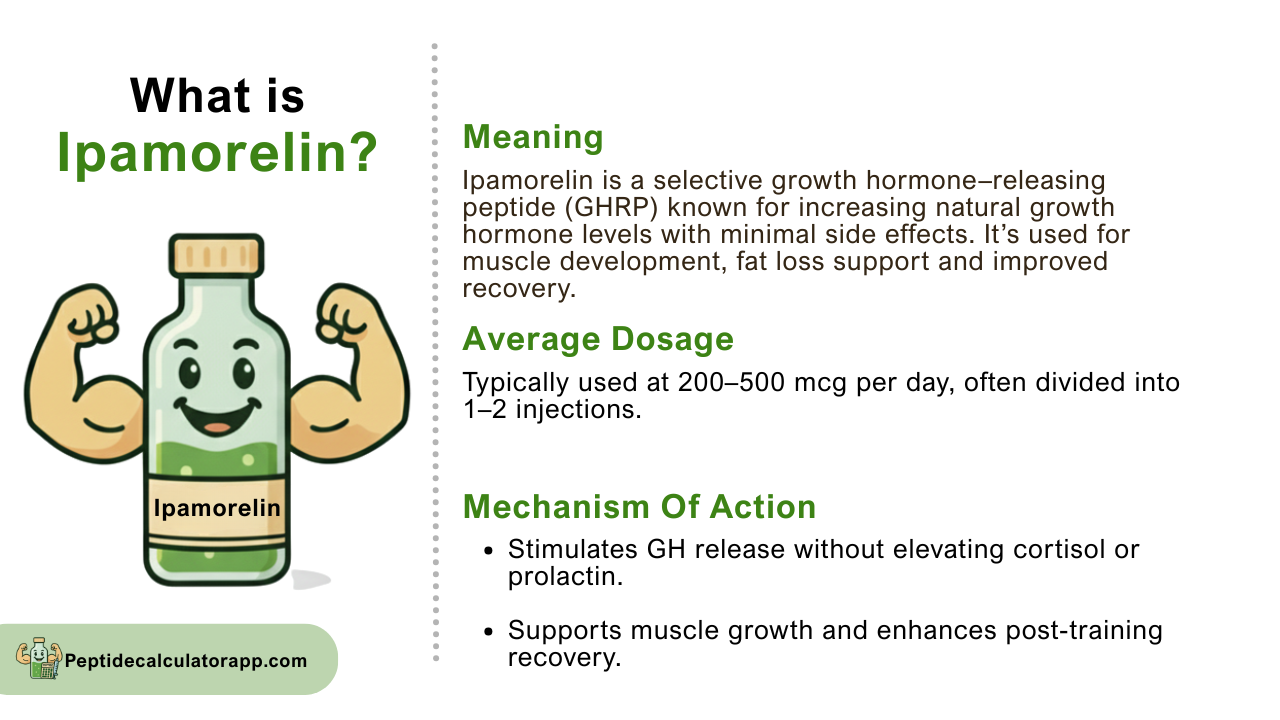
How Ipamorelin Works?
Ipamorelin works by binding to and activating the growth hormone secretagogue receptor (GHSR) located in the pituitary gland. When administered, it mimics the natural signaling pathway that triggers growth hormone release, effectively “telling” the pituitary gland to produce and release more growth hormone into the bloodstream.
The peptide’s mechanism involves several key steps. First, Ipamorelin binds to the GHSR, which is the same receptor that responds to the body’s natural ghrelin hormone. This binding triggers a cascade of intracellular signaling events that ultimately leads to the synthesis and release of growth hormone from somatotroph cells in the anterior pituitary.
What sets Ipamorelin apart from other peptides is its remarkable selectivity. While some growth hormone-releasing peptides can stimulate the release of other hormones like cortisol or prolactin, Ipamorelin specifically targets growth hormone production with minimal impact on other hormonal pathways. This selective action reduces the risk of side effects and makes it a more predictable therapeutic option.
Benefits of Ipamorelin
Increased Growth Hormone Production
Ipamorelin is a highly selective growth hormone–releasing peptide (GHRP) known for stimulating natural GH release without raising cortisol or prolactin. Research by National library of Medicine suggests , it promotes a steady increase in growth hormone levels that supports recovery, regeneration, and overall hormonal balance.
Enhanced Muscle Growth & Recovery
Elevated growth hormone from Ipamorelin contributes to improved protein synthesis, making it easier for the body to build and preserve lean muscle. Many users notice faster recovery after workouts, decreased soreness, and stronger performance over time. This makes Ipamorelin a popular choice for individuals seeking to enhance muscle development or maintain muscle mass during cutting phases.
Accelerated Fat Loss
Growth hormone plays a major role in breaking down stored body fat, especially stubborn visceral fat. By boosting GH levels, Ipamorelin supports a more efficient metabolism and helps the body rely more on fat for energy. Over time, this can lead to leaner body composition, better definition, and improved metabolic health.
Improved Sleep Quality
Another commonly reported benefit is deeper, more restorative sleep. Growth hormone is naturally released in larger amounts during deep sleep cycles, and Ipamorelin enhances this process. Users often experience better sleep architecture, easier recovery, and improved morning energy. Higher-quality sleep also amplifies other benefits such as mental clarity and physical performance.
Skin, Hair & Anti-Aging Support
Because growth hormone supports cellular repair and collagen production, Ipamorelin may contribute to healthier, more youthful-looking skin. Many users report improved elasticity, reduction in fine lines, and stronger hair and nails. These regenerative effects make Ipamorelin a popular choice for those looking to enhance aesthetic wellness as well as physical health.
Dosage and Administration
Proper dosage and administration of Ipamorelin are crucial for achieving optimal results while minimizing potential side effects. The typical dosage ranges from 200 to 300 micrograms per injection, administered subcutaneously using an insulin syringe.
Most protocols recommend injecting Ipamorelin 1-3 times daily, with timing being an important consideration. The most common approach involves injections before meals and before bedtime, as this mimics the natural patterns of growth hormone release. Taking Ipamorelin on an empty stomach is generally recommended to maximize absorption and effectiveness.
The injection sites typically include areas with sufficient subcutaneous fat, such as the abdomen, thighs, or upper arms. It’s important to rotate injection sites to prevent irritation or the development of lipodystrophy. The peptide should be injected slowly and steadily, and the injection site should be clean and sterile.
For beginners, starting with lower doses and gradually increasing based on response and tolerance is advisable. Some individuals may find that they respond well to lower doses, while others may require higher amounts within the safe range to achieve desired effects.
Storage and Stability
Proper storage of Ipamorelin is essential to maintain its potency and effectiveness. The peptide is typically supplied as a lyophilized powder that must be reconstituted with bacteriostatic water before use. In its powder form, Ipamorelin should be stored in a refrigerator at temperatures between 2-8°C (36-46°F).
Once reconstituted, the peptide solution becomes more sensitive to environmental factors. It should be stored in the refrigerator and used within 30 days for optimal potency. Some sources suggest that properly stored reconstituted Ipamorelin can maintain effectiveness for up to 60 days, but shorter storage periods are generally recommended to ensure maximum efficacy.
When handling the peptide, it’s important to avoid shaking or agitating the solution vigorously, as this can denature the protein structure. Instead, gentle swirling or rolling between the palms is recommended for mixing. Exposure to extreme temperatures, direct sunlight, or contamination should be avoided at all times.
Potential Side Effects
General Tolerance and Safety
Ipamorelin is widely regarded as one of the safest and most well-tolerated growth hormone–releasing peptides. Most users experience minimal issues, and side effects—when they do occur—are typically mild, temporary, and most noticeable during the early stages of use or at higher-than-recommended doses.
Injection Site Reactions
One of the most common side effects involves mild irritation at the injection site. This can include slight redness, swelling, or tenderness shortly after administration. These reactions usually resolve quickly and are often minimized with proper injection technique, clean handling, and consistent rotation of injection sites to avoid repeated stress on the same area.
Increased Hunger
Because Ipamorelin mimics the action of ghrelin—the hormone responsible for signaling hunger—some users may experience an increase in appetite. For individuals aiming to gain muscle mass or increase caloric intake, this effect can be helpful. However, those focused on fat loss or calorie control may find it less desirable, although it often becomes more manageable as the body adjusts.
Headaches and Fatigue
A small number of users report headaches or fatigue during the initial phase of treatment. These symptoms are generally short-lived and tend to fade as the body adapts to elevated growth hormone levels. Staying hydrated, ensuring adequate sleep, and maintaining proper dosing schedules may help minimize these effects.
Rare or Less Common Effects
While unusual, some individuals may experience temporary water retention, slight fluctuations in blood sugar, or mild feelings of light-headedness. These effects are typically dose-dependent and resolve with dosage adjustments or as the body becomes accustomed to the peptide. Overall, severe or long-lasting side effects are exceptionally rare with Ipamorelin when used responsibly.
FAQs
Q1. Can Ipamorelin be combined with other peptides?
Ans: Yes, Ipamorelin is often used in combination with other peptides to enhance specific effects. Common combinations include pairing it with CJC-1295 for prolonged growth hormone release or with other peptides targeting different physiological pathways.
Q2. Is Ipamorelin legal?
Ans: The legal status of Ipamorelin varies by country and jurisdiction. In many places, it exists in a regulatory gray area, being available for research purposes but not approved for human consumption. It’s essential to check local laws and regulations before obtaining or using Ipamorelin.
Q3. What’s the difference between Ipamorelin and direct growth hormone injections?
Ans: Ipamorelin stimulates the body’s natural production of growth hormone, while direct HGH injections provide synthetic growth hormone. Ipamorelin is generally considered safer with fewer side effects, as it works with the body’s natural regulatory mechanisms.
Q4. Can women use Ipamorelin?
Ans: Yes, women can use Ipamorelin, and many report positive results. However, dosing may need to be adjusted, and women should be particularly cautious about potential effects on hormonal balance, especially if they are pregnant, breastfeeding, or have hormone-sensitive conditions.
Final Thoughts
Ipamorelin represents a promising approach to growth hormone optimization, offering many of the benefits associated with increased growth hormone levels while maintaining a relatively favorable safety profile. Its selectivity and minimal side effects make it an attractive option for individuals seeking to improve their body composition, sleep quality, and overall well-being.
However, it’s crucial to approach Ipamorelin use with caution and proper medical oversight. While research supports its effectiveness and safety when used appropriately, individual responses can vary, and potential interactions with existing health conditions or medications must be considered.
As with any therapeutic intervention, the decision to use Ipamorelin should be based on a thorough evaluation of potential benefits and risks, preferably with the guidance of a qualified healthcare provider familiar with peptide therapy. Proper dosing, administration, and monitoring are essential for achieving optimal results while minimizing potential adverse effects.