
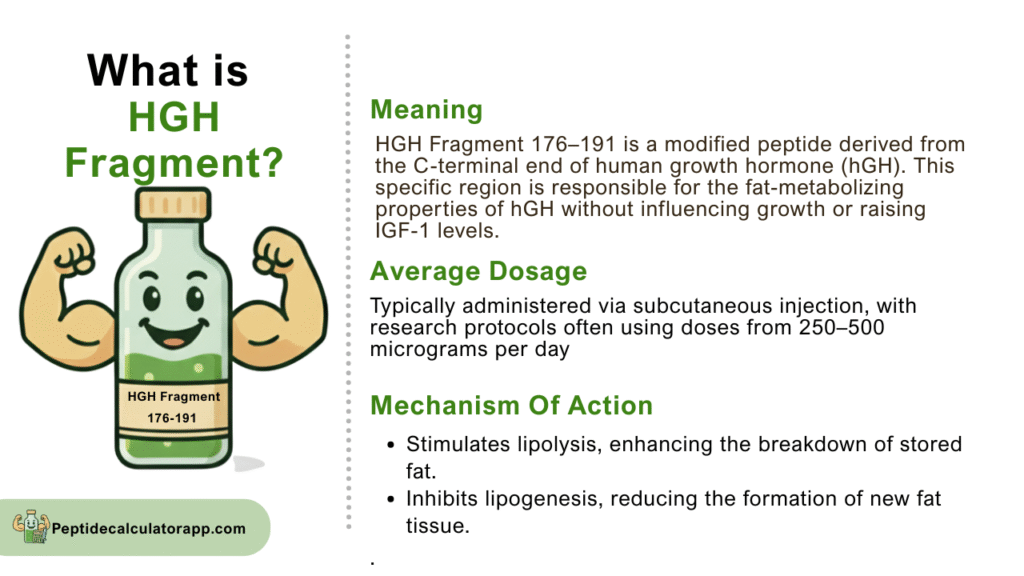
HGH Fragment 176-191 is a modified form of amino acids 176-191 from the C-terminus of human growth hormone (HGH). This specific fragment represents the tail end of the HGH molecule and contains the fat-burning properties of growth hormone without affecting blood sugar levels or causing the growth-promoting effects associated with full-length HGH. Originally developed by researchers seeking to isolate the lipolytic (fat-burning) effects of growth hormone, this 16-amino acid peptide has become a subject of intense scientific interest.
The peptide is also known by several other names, including AOD-9604 (Anti-Obesity Drug), reflecting its primary application in weight management research. Unlike complete growth hormone, HGH Fragment 176-191 specifically targets adipose tissue without influencing carbohydrate metabolism or promoting excessive growth, making it an attractive option for those seeking targeted fat loss benefits.
How HGH Fragment 176-191 Works
The mechanism of action of HGH Fragment 176-191 centers on its ability to stimulate lipolysis while inhibiting lipogenesis. The peptide works by binding to fat cell receptors, specifically targeting adipocytes (fat cells) to promote the breakdown of stored triglycerides into free fatty acids and glycerol. This process occurs through the activation of hormone-sensitive lipase, an enzyme crucial for fat metabolism.
Unlike full-length growth hormone, HGH Fragment 176-191 does not bind to growth hormone receptors that affect blood glucose levels or insulin sensitivity. This selective action allows the peptide to maintain its fat-burning properties while avoiding many of the potential side effects associated with complete HGH therapy.
Research indicates that the peptide may also influence metabolism by increasing energy expenditure and enhancing the body’s ability to utilize stored fat as an energy source. This dual action of promoting fat breakdown while preventing new fat formation creates an optimal environment for body composition improvement.
Benefits of HGH Fragment 176-191?
Targeted Fat Loss
HGH Fragment 176-191 is best known for its strong fat-burning properties. Research indicates that it specifically targets adipose tissue, helping reduce stubborn fat—especially visceral and abdominal fat—without affecting other tissues. This selective action makes it appealing for individuals focused on body recomposition rather than full growth hormone effects.
Improved Body Composition
One of the standout benefits of this fragment is its ability to promote fat loss while preserving lean muscle mass. Users often report a more favorable muscle-to-fat ratio, leading to a leaner and more defined physique. Because it does not stimulate general growth, it avoids many of the musculoskeletal side effects linked with full HGH therapy.
Enhanced Metabolic Function
Some studies suggest that HGH Fragment 176-191 may enhance metabolic efficiency and support higher energy levels. Improved fat oxidation means the body becomes more effective at using stored fat as fuel, which can benefit both weight management and physical performance.
No Impact on Blood Sugar Regulation
Unlike full-length HGH—which can sometimes influence insulin sensitivity—HGH Fragment 176-191 does not appear to disrupt glucose metabolism. This may make it a safer option for individuals who are concerned about blood sugar fluctuations or insulin-related side effects.
Dosage and Administration
Proper dosage and administration of HGH Fragment 176-191 are crucial for achieving optimal results while minimizing potential risks. Research protocols typically suggest doses ranging from 250 to 500 micrograms daily, administered via subcutaneous injection. The peptide is usually divided into multiple doses throughout the day, with many protocols recommending administration before meals or exercise sessions to maximize fat-burning potential.
Timing of administration appears to be important for maximizing effectiveness. Many researchers suggest taking the peptide on an empty stomach, typically first thing in the morning and before workouts. Some protocols recommend avoiding food for 30-60 minutes after injection to allow for optimal absorption and activity.
The injection sites should be rotated regularly to prevent irritation or tissue damage. Common injection areas include the abdomen, thighs, and deltoids. Users should always employ proper sterile technique and use appropriate injection supplies to minimize infection risk.
Cycle length varies depending on individual goals and response, but many research protocols suggest 12-16 week cycles followed by appropriate rest periods. It’s essential to start with lower doses to assess individual tolerance and response before adjusting to higher amounts.
Storage and Stability
Proper storage of HGH Fragment 176-191 is essential for maintaining its potency and effectiveness. Lyophilized (freeze-dried) peptide should be stored in a refrigerator at 2-8°C (36-46°F) and protected from light. Under these conditions, the unreconstituted peptide can remain stable for extended periods, typically up to two years when properly stored.
Once reconstituted with bacteriostatic water or sterile water, the peptide solution becomes more fragile and requires careful handling. Reconstituted solutions should be stored in the refrigerator and used within 28 days when mixed with bacteriostatic water, or within 72 hours when using sterile water. The solution should never be frozen once reconstituted, as this can damage the peptide structure.
When handling the peptide, avoid vigorous shaking or agitation, which can denature the delicate protein structure. Instead, gently roll the vial between your hands or allow it to dissolve naturally. Always use proper sterile technique when reconstituting and withdrawing the peptide to prevent contamination.
Potential Side Effects
Mild Injection Site Reactions
The most commonly reported side effects of HGH Fragment 176-191 are localized to the injection area. Users may experience temporary redness, swelling, or irritation. These reactions are typically mild and resolve without intervention, especially when proper injection techniques and site rotation are used.
Fatigue and Headaches
Some individuals notice mild fatigue or headaches during the initial phase of use. These effects usually improve as the body adapts to the peptide. Compared to full-length growth hormone, this fragment is far less likely to cause systemic discomfort.
Lower Risk Compared to Full HGH
Unlike traditional HGH therapy, Fragment 176-191 generally does not cause water retention, joint pain, numbness, or carpal tunnel–type symptoms. Its selective mechanism of action minimizes many of the side effects associated with broader growth hormone stimulation.
Rare Allergic Reactions
Although uncommon, allergic reactions can occur. Symptoms may include significant swelling, difficulty breathing, or widespread rash. These signs require immediate cessation of use and prompt medical evaluation.
Limited Long-Term Data
Because HGH Fragment 176-191 is still under study, long-term safety data remains limited. Individuals considering its use should balance the potential benefits with the uncertainty surrounding extended use, and should ideally do so under the guidance of a healthcare professional experienced in peptide therapy.
FAQs
Q1. How long does it take to see results from HGH Fragment 176-191?
Ans: Most users report initial changes in body composition within 4-6 weeks of consistent use, with more significant results typically visible after 8-12 weeks. Individual response times can vary based on factors such as diet, exercise, baseline body composition, and dosing protocol.
Q2. Can HGH Fragment 176-191 be combined with other peptides?
Ans: Some research suggests potential synergistic effects when combining HGH Fragment 176-191 with other peptides, though such combinations should only be considered under professional guidance. Each additional compound increases complexity and potential for interactions.
Q3. Is HGH Fragment 176-191 legal?
Ans: The legal status of HGH Fragment 176-191 varies by jurisdiction and intended use. In many countries, it’s available for research purposes but not approved for human therapeutic use. Users should research local regulations and consult appropriate authorities.
Q4. Does HGH Fragment 176-191 require post-cycle therapy?
Ans: Unlike anabolic steroids, HGH Fragment 176-191 typically doesn’t require formal post-cycle therapy since it doesn’t significantly affect hormonal balance. However, gradual discontinuation rather than abrupt stopping is often recommended.
Final Thoughts
HGH Fragment 176-191 represents a fascinating development in peptide research, offering the potential for targeted fat loss without many of the side effects associated with full growth hormone therapy. Its selective action on adipose tissue, combined with its apparent safety profile, makes it an intriguing option for individuals seeking to optimize their body composition.
However, like all peptide therapies, HGH Fragment 176-191 should be approached with careful consideration and appropriate caution. The importance of proper dosing, administration, and storage cannot be overstated, and individuals should always prioritize safety over rapid results.
As research continues to evolve, our understanding of this peptide’s full potential and limitations will undoubtedly expand. For now, those considering HGH Fragment 176-191 should focus on education, professional guidance, and maintaining realistic expectations while prioritizing overall health and well-being.