
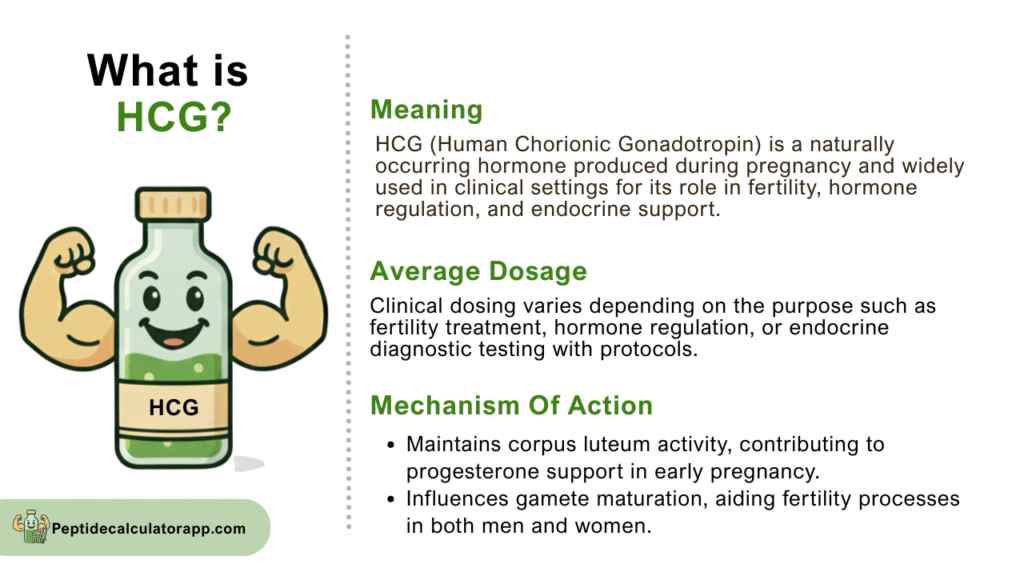
Human Chorionic Gonadotropin (HCG) is a hormone naturally produced by the placenta during pregnancy, specifically by the syncytiotrophoblast cells. Structurally, HCG consists of two subunits: an alpha subunit similar to other hormones like LH, FSH, and TSH, and a unique beta subunit that gives HCG its distinctive properties. The hormone reaches peak levels during the first trimester of pregnancy and gradually declines thereafter.
In therapeutic applications, HCG is typically derived from the urine of pregnant women or produced synthetically through recombinant DNA technology. The pharmaceutical form maintains the same biological activity as the naturally occurring hormone, making it effective for various medical purposes beyond pregnancy detection.
How HCG Works?
HCG exerts its effects by binding to luteinizing hormone (LH) receptors in target tissues, particularly in the gonads. In males, HCG stimulates Leydig cells in the testes to produce testosterone, mimicking the action of natural LH. This mechanism makes HCG particularly valuable in treating hypogonadism and supporting testosterone production when the hypothalamic-pituitary-gonadal axis is suppressed.
In females, HCG triggers ovulation by acting on mature ovarian follicles, similar to the natural LH surge. The hormone also supports corpus luteum function, maintaining progesterone production essential for early pregnancy maintenance. This dual action makes HCG invaluable in fertility treatments and ovulation induction protocols.
The hormone’s mechanism extends beyond reproductive functions, influencing metabolic processes and cellular signaling pathways. Similar to how other therapeutic compounds like BPC-157 target specific cellular mechanisms for healing, HCG activates precise hormonal pathways to achieve its therapeutic effects.
Benefits of HCG (Human Chorionic Gonadotropin)
Restoration of Testosterone Production
HCG offers significant therapeutic value for men by effectively stimulating natural testosterone production. This helps maintain muscle mass, bone density, libido, and sexual function, particularly during hormone replacement therapy or recovery from anabolic steroid use. By supporting endogenous testosterone production, HCG helps preserve testicular size and overall function.
Fertility Enhancement
One of the most established benefits of HCG is its role in fertility treatments. In men, HCG stimulates spermatogenesis and can improve both sperm count and quality. For women undergoing assisted reproductive technologies, HCG is essential for triggering final oocyte maturation and precisely timing ovulation. Its ability to mimic luteinizing hormone makes it invaluable in reproductive medicine.
Support for Secondary Hypogonadism
Men with secondary hypogonadism often benefit from HCG as it activates the body’s natural hormone production rather than providing external testosterone alone. This approach helps restore hormonal balance while maintaining fertility potential, which can be compromised with traditional testosterone replacement therapy.
Potential Role in Weight Management
HCG has been used in conjunction with very low-calorie diets as part of certain weight-loss protocols. While some individuals report successful outcomes, this use remains controversial. Medical supervision is essential, as the effectiveness and safety of HCG for weight management continue to be debated in clinical research.
Dosage and Administration
HCG dosing varies significantly based on the intended therapeutic application and individual patient factors. For testosterone restoration in adult males, typical doses range from 500 to 2000 IU administered 2-3 times per week via subcutaneous or intramuscular injection.
In fertility treatments, women may receive 5000-10000 IU as a single injection to trigger ovulation, while men undergoing fertility enhancement might receive 1000-4000 IU twice weekly for several months. Pediatric dosing for cryptorchidism typically involves 500-1000 IU administered 2-3 times weekly for 4-6 weeks.
The administration route affects absorption and efficacy, with subcutaneous injections providing more consistent absorption compared to intramuscular delivery. Treatment duration depends on therapeutic goals, ranging from single-dose applications in fertility treatments to ongoing therapy lasting several months for testosterone restoration.
Storage and Stability
Proper storage of HCG is crucial for maintaining its biological activity and therapeutic efficacy. Lyophilized (freeze-dried) HCG should be stored at room temperature in a dry, dark place before reconstitution. Once reconstituted with bacteriostatic water, the solution must be refrigerated at 36-46°F (2-8°C) and used within 30-60 days, depending on the manufacturer’s specifications.
Reconstituted HCG is sensitive to temperature fluctuations, light exposure, and bacterial contamination. Using bacteriostatic water containing benzyl alcohol helps prevent bacterial growth, extending the solution’s usable life. Avoid freezing reconstituted HCG, as this can denature the protein and reduce its effectiveness.
For travel or temporary storage, reconstituted HCG can remain stable at room temperature for several hours, but should be returned to refrigeration as soon as possible. Always inspect the solution before use – it should be clear and colorless, with any cloudiness or discoloration indicating potential degradation.
Potential Side Effects
Hormonal Effects in Men
Because HCG stimulates natural testosterone production, some men may experience hormone-related side effects. These can include acne, mood fluctuations, increased irritability or aggression, and mild fluid retention. In certain cases—especially with higher or prolonged doses—breast tenderness or gynecomastia may occur due to shifts in estrogen levels.
Risk of Ovarian Hyperstimulation in Women
Women using HCG as part of fertility protocols may develop ovarian hyperstimulation syndrome (OHSS). This condition involves swollen, painful ovaries and can lead to abdominal discomfort, bloating, or fluid buildup. Severe forms of OHSS are uncommon but require immediate medical care to prevent complications.
Allergic Reactions
Although rare, allergic reactions to HCG can occur. These may present as localized skin irritation, rash, or swelling. In very rare cases, individuals may develop severe reactions such as difficulty breathing or anaphylaxis. Anyone with a known allergy to HCG or its formulation should avoid treatment.
Increased Risk of Blood Clots
HCG can raise the risk of thromboembolic events, particularly in individuals with existing risk factors for clotting disorders. This concern is especially relevant for women undergoing fertility treatments, where elevated hormone levels can further contribute to clot formation. Close monitoring is essential for patients at higher risk.
FAQs
Q1. How long does it take for HCG to increase testosterone levels?
Ans: Most men experience testosterone level increases within 2-4 weeks of starting HCG therapy, with peak effects typically achieved after 6-8 weeks of consistent treatment.
Q2. Can HCG be used long-term for testosterone replacement?
Ans: HCG can be used for extended periods, but long-term therapy requires regular monitoring of hormone levels, blood counts, and potential side effects. Some patients cycle on and off HCG to prevent receptor desensitization.
Q3. Is HCG safe for women trying to conceive?
Ans: When used appropriately under medical supervision, HCG is safe and effective for fertility treatments. However, it must be part of a comprehensive fertility protocol with proper monitoring for complications like OHSS.
Q4. What’s the difference between pharmaceutical HCG and homeopathic HCG?
Ans: Pharmaceutical HCG contains actual hormone with measurable biological activity, while homeopathic preparations contain negligible amounts of active hormone and are not considered medically effective.
Q5. Can HCG cause permanent changes to hormone production?
Ans: When used appropriately, HCG typically does not cause permanent changes to natural hormone production. However, misuse or excessive dosing may potentially affect the hypothalamic-pituitary-gonadal axis.
Final Thoughts
HCG (Human Chorionic Gonadotropin) represents a valuable therapeutic tool with proven efficacy across multiple medical applications. From fertility enhancement to testosterone restoration, this naturally occurring hormone offers unique benefits by stimulating endogenous hormone production rather than replacing it.
Success with HCG therapy depends on proper patient selection, appropriate dosing, and careful medical supervision. While generally safe when used correctly, potential side effects and contraindications require thorough evaluation before treatment initiation.
As research continues to explore new applications for HCG, its role in modern medicine continues to evolve. Patients considering HCG therapy should work closely with qualified healthcare providers to determine if this treatment aligns with their therapeutic goals and medical circumstances.