
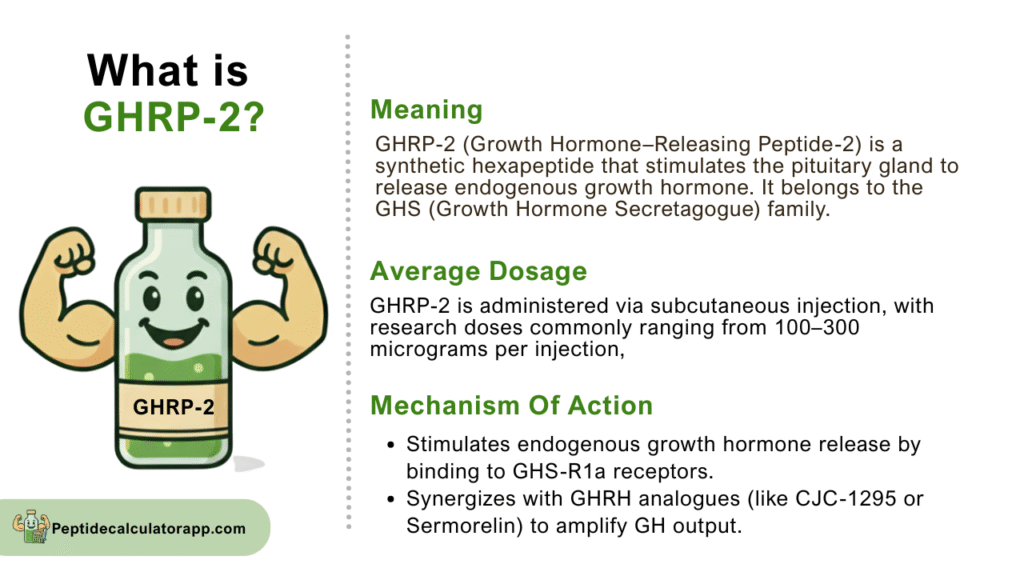
GHRP-2 is a synthetic peptide composed of six amino acids that functions as a growth hormone secretagogue. Originally developed in the 1990s, this peptide was designed to mimic the action of ghrelin, the body’s natural hunger hormone, while primarily focusing on stimulating growth hormone release from the anterior pituitary gland. Unlike its natural counterpart, GHRP-2 offers enhanced stability and bioavailability, making it more suitable for research and potential therapeutic applications.
The peptide belongs to a class of compounds known as growth hormone releasing peptides (GHRPs), which work by binding to specific receptors in the hypothalamus and pituitary gland. What sets GHRP-2 apart from other peptides in this category is its balanced approach to growth hormone stimulation – it provides significant growth hormone release while maintaining relatively minimal effects on cortisol and prolactin levels compared to other GHRPs.
How GHRP-2 Works?
GHRP-2 operates through a sophisticated mechanism that involves multiple pathways in the endocrine system. The primary action occurs when GHRP-2 binds to the growth hormone secretagogue receptor (GHS-R), also known as the ghrelin receptor, located in the hypothalamus and pituitary gland. This binding triggers a cascade of events that ultimately leads to the release of growth hormone.
Upon receptor activation, GHRP-2 stimulates the release of growth hormone-releasing hormone (GHRH) from the hypothalamus. Simultaneously, it works to suppress somatostatin, the hormone responsible for inhibiting growth hormone release. This dual action creates an optimal environment for growth hormone secretion, resulting in elevated levels that can persist for several hours after administration.
The peptide also demonstrates the ability to work synergistically with naturally occurring GHRH, meaning that when both compounds are present, the growth hormone response is significantly amplified compared to either compound alone. This synergistic effect makes GHRP-2 particularly effective in research settings where maximized growth hormone response is desired.
Benefits of GHRP-2
Enhanced Growth Hormone Production
GHRP-2 is widely researched for its ability to significantly increase growth hormone levels. Elevated growth hormone supports improved protein synthesis, which promotes muscle development and aids in faster recovery. Studies indicate that individuals receiving GHRP-2 often experience improvements in body composition, including increased lean muscle mass and reductions in body fat.
Improved Sleep Quality
Another major benefit of GHRP-2 is its positive impact on sleep. Growth hormone is closely tied to sleep regulation and recovery, and many research subjects report deeper, more restorative sleep patterns. The peptide appears to enhance both REM and deep sleep phases, contributing to overall wellness and improved recovery.
Cognitive Enhancement
Research has shown cognitive improvements in individuals using GHRP-2, including better memory, sharper focus, and enhanced mental clarity. These benefits are believed to stem from growth hormone’s influence on neuroplasticity and healthy brain function.
Cardiovascular Support
Some studies suggest that GHRP-2 may contribute to better cardiovascular health. Improvements in lipid profiles and enhanced cardiac function have been observed, indicating potential metabolic and heart-health benefits associated with its use.
Accelerated Recovery and Healing
GHRP-2 may accelerate recovery from both exercise and injury. Its ability to stimulate collagen production and support tissue repair mechanisms makes it valuable in research involving athletic performance and rehabilitation. This healing potential mirrors the restorative properties seen in other regenerative peptides such as BPC-157.
Dosage and Administration
GHRP-2 administration typically involves subcutaneous injection, with dosages generally ranging from 100 to 300 micrograms per injection. The most common protocol involves administering the peptide 2-3 times daily, with timing being crucial for optimal effectiveness. Most researchers recommend administering GHRP-2 on an empty stomach, either upon waking, before exercise, or before bedtime to maximize growth hormone response.
The peptide is usually reconstituted with bacteriostatic water and should be administered using insulin syringes for precise dosing. Injection sites commonly include the abdomen, thigh, or deltoid area, with rotation of injection sites recommended to prevent tissue irritation. Each injection should be administered slowly and steadily to ensure proper absorption.
Cycling protocols vary depending on research objectives, but many studies employ cycles of 8-12 weeks followed by rest periods of 4-6 weeks. This approach helps maintain receptor sensitivity and prevents potential desensitization to the peptide’s effects. Some researchers prefer continuous use at lower doses, while others implement more aggressive cycling patterns based on specific research goals.
Storage and Stability
Proper storage of GHRP-2 is essential for maintaining its potency and effectiveness. In its lyophilized (freeze-dried) form, the peptide should be stored in a refrigerator at temperatures between 2-8°C (36-46°F). Under these conditions, unreconstituted GHRP-2 can maintain stability for up to two years when protected from light and moisture.
Once reconstituted with bacteriostatic water, the peptide’s stability decreases significantly and requires more careful handling. Reconstituted GHRP-2 should be stored in the refrigerator and used within 30 days for optimal potency. Some researchers report acceptable stability for up to 60 days under proper storage conditions, but this extended timeframe may result in reduced effectiveness.
Temperature fluctuations should be minimized, and the peptide should never be frozen once reconstituted, as this can damage the molecular structure. When transporting or traveling with GHRP-2, insulated containers with ice packs can help maintain appropriate temperatures. Always inspect the solution before use – any cloudiness, discoloration, or precipitation indicates degradation and the solution should be discarded.
Potential Side Effects
Increased Hunger
The most frequently reported side effect of GHRP-2 is a noticeable increase in hunger. This occurs due to its interaction with ghrelin receptors, often leading to strong appetite stimulation within 20–30 minutes of administration. The heightened hunger response can last for several hours and is considered a normal physiological effect of the peptide.
Injection Site Reactions
Some individuals may experience mild injection site reactions such as redness, swelling, or irritation. These effects are typically temporary and resolve on their own. Proper injection technique and rotating sites can help minimize these localized reactions.
Water Retention and Joint Discomfort
Water retention is another possible side effect during the initial weeks of use. This may be accompanied by mild joint discomfort or stiffness. These symptoms usually improve as the body adjusts, but monitoring is recommended if they persist.
Headaches and Dizziness
Headaches or mild dizziness may occur, particularly when first beginning GHRP-2 administration. These effects are often temporary and tend to diminish as the body becomes accustomed to the peptide.
Numbness and Tingling Sensations
In rare cases, users may experience numbness or tingling in the hands, feet, or other extremities. These sensations should be monitored closely, as they may indicate the need for dosage adjustment or discontinuation of the peptide.
Potential Elevation of Cortisol
While less common than with other GHRP-class peptides, GHRP-2 may still cause elevations in cortisol levels in certain individuals. Regular hormone monitoring is recommended during long-term research use to ensure healthy endocrine function is maintained.
FAQs
Q1. How long does it take to see results from GHRP-2?
Ans: Most research participants begin noticing changes within 2-4 weeks of consistent use. Initial effects often include improved sleep quality and increased energy levels, while changes in body composition typically become apparent after 6-8 weeks of regular administration.
Q2. Can GHRP-2 be used with other peptides?
Ans: Yes, GHRP-2 is often studied in combination with other peptides for synergistic effects. Common combinations include GHRP-2 with GHRH peptides for enhanced growth hormone release, or with other research peptides targeting different pathways for comprehensive wellness protocols.
Q3. Is GHRP-2 safe for long-term use?
Ans: Current research suggests that GHRP-2 has a favorable safety profile for extended use when administered properly. However, long-term studies are ongoing, and regular monitoring of hormone levels and overall health markers is recommended during extended research periods.
Q4. What is the difference between GHRP-2 and other growth hormone secretagogues?
Ans: GHRP-2 offers a balanced approach with significant growth hormone stimulation while producing minimal effects on cortisol and prolactin levels. This makes it more tolerable than some other GHRPs while maintaining high effectiveness for growth hormone release.
Q5. Can GHRP-2 cause dependency or tolerance?
Ans: Research indicates that cycling GHRP-2 helps prevent receptor desensitization and maintains effectiveness over time. While physical dependency is not typically observed, implementing appropriate rest periods between cycles is recommended to maintain optimal receptor sensitivity.
Final Thoughts
GHRP-2 represents a valuable tool in peptide research and therapeutic applications, offering researchers and clinicians a reliable method for studying growth hormone optimization. Its well-documented safety profile, combined with its effectiveness in stimulating growth hormone release, makes it an attractive option for various research protocols and clinical investigations.
The peptide’s versatility in addressing multiple aspects of health and wellness, from body composition and sleep quality to cognitive function and recovery, demonstrates its potential value in comprehensive research approaches. As our understanding of peptide therapy continues to evolve, GHRP-2 remains at the forefront of growth hormone research.
For those considering GHRP-2 for research purposes, proper administration, storage, and monitoring protocols are essential for achieving optimal results while maintaining safety. Consultation with qualified healthcare providers and adherence to established research guidelines ensure that GHRP-2 research is conducted safely and effectively.