
Adipotide, also known as FTPP (Fat-Targeted Proapoptotic Peptide), is a synthetic peptide compound specifically designed to target and destroy fat tissue. This experimental peptide works by disrupting the blood supply to adipose tissue, leading to fat cell death and subsequent weight loss. Originally developed as a potential cancer treatment due to its ability to target blood vessels, researchers discovered its remarkable effects on fat tissue reduction.
The peptide consists of a targeting sequence that binds specifically to blood vessels in white adipose tissue, coupled with a proapoptotic domain that triggers cell death. This dual-action mechanism makes Adipotide a unique compound in the weight management landscape, offering a targeted approach rather than the systemic effects seen with traditional weight loss medications.
How Adipotide Works?
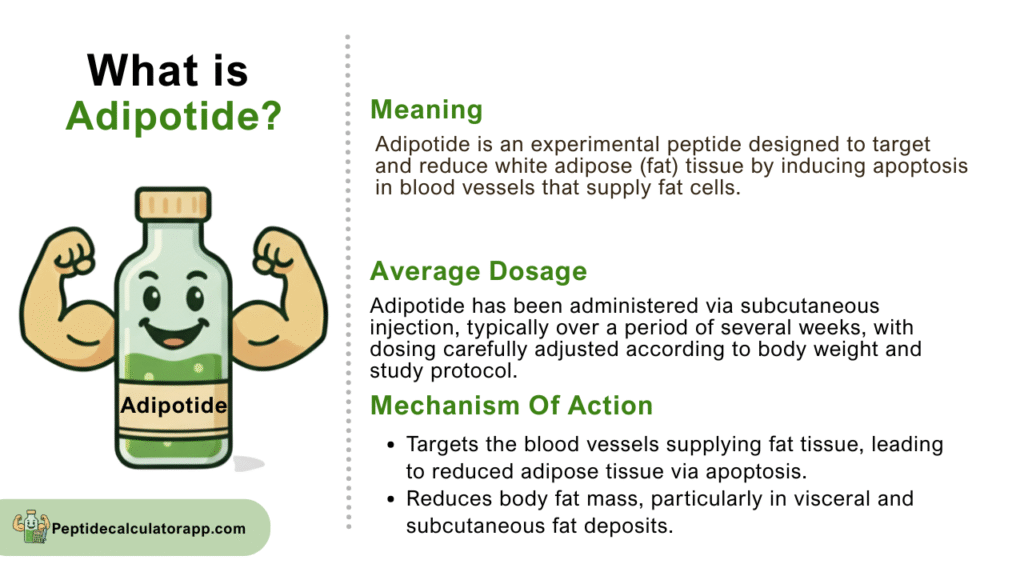
Adipotide’s mechanism of action is both sophisticated and targeted. The peptide contains two key components: a homing sequence and a cytotoxic domain. The homing sequence specifically recognizes and binds to prohibitin, a protein highly expressed in the blood vessels of white adipose tissue. Once bound, the cytotoxic domain triggers apoptosis (programmed cell death) in the endothelial cells lining these blood vessels.
This process effectively cuts off the blood supply to fat cells, causing them to die and be reabsorbed by the body. The selectivity of Adipotide for adipose tissue blood vessels is what makes it particularly interesting, as it minimizes effects on other body systems. Unlike traditional weight loss approaches that rely on caloric restriction or metabolic changes, Adipotide directly targets the infrastructure supporting fat tissue.
The peptide’s action is similar to how certain therapeutic peptides work in regenerative medicine, though with a destructive rather than healing purpose. While compounds like BPC-157 promote healing and tissue repair, Adipotide specifically targets unwanted tissue for elimination.
Benefits of Adipotide (FTPP)
Selective Fat Loss
Adipotide primarily targets adipose tissue, resulting in substantial reductions in body fat while preserving lean muscle mass. This selective action distinguishes it from traditional weight loss methods that often lead to muscle loss alongside fat reduction.
Improved Metabolic Health
Research has demonstrated that Adipotide can enhance insulin sensitivity and glucose metabolism. Reducing visceral fat contributes to better metabolic markers and overall improved metabolic function.
Sustainable Weight Management
Unlike conventional dieting, which typically shrinks fat cells, Adipotide may eliminate fat cells entirely. This mechanism supports more long-term weight maintenance, as eliminated fat cells cannot refill, making the achieved weight loss potentially more durable.
Minimal Appetite Interference
Weight loss induced by Adipotide does not rely on appetite suppression or stimulant effects, reducing the typical side effects seen with other weight loss compounds and promoting a safer metabolic approach.
Dosage and Administration
Adipotide dosing protocols are still being refined through ongoing research, as this peptide remains in experimental stages. In clinical trials, dosages have typically ranged from 0.25 mg/kg to 1.0 mg/kg of body weight, administered subcutaneously. The peptide is usually given as daily injections over a treatment period of several weeks.
Most research protocols involve a gradual dose escalation approach, starting with lower doses to assess tolerance before increasing to therapeutic levels. Treatment cycles have varied in studies, with some lasting 4-8 weeks followed by observation periods to monitor sustained effects.
It’s crucial to emphasize that Adipotide is not currently approved for clinical use outside of research settings. Any administration should only occur under strict medical supervision as part of approved clinical trials or research protocols. The dosing information available comes from controlled research environments and should not be interpreted as clinical recommendations.
Storage and Stability
Like most peptide compounds, Adipotide requires careful storage to maintain its stability and efficacy. The lyophilized (freeze-dried) form should be stored at -20°C or below, protected from light and moisture. Once reconstituted with bacteriostatic water, the solution should be stored in the refrigerator at 2-8°C.
Reconstituted Adipotide typically maintains stability for 2-4 weeks when properly stored in refrigerated conditions. However, for optimal potency, it’s recommended to use reconstituted solutions within 1-2 weeks. The peptide should be allowed to reach room temperature before injection to reduce discomfort, but should not be left at room temperature for extended periods.
Proper handling includes using sterile techniques during reconstitution and avoiding vigorous shaking, which can damage the peptide structure. The solution should appear clear and colorless; any cloudiness or precipitation indicates degradation and the solution should be discarded.
Potential Side Effects
Injection Site Reactions
The most commonly reported side effects are local reactions at the injection site, including redness, swelling, or mild pain. These reactions are typically mild and resolve quickly without intervention.
Kidney and Systemic Effects
Because Adipotide targets blood vessels, systemic effects have been observed in some studies. Kidney toxicity has been reported, particularly at higher doses, necessitating careful monitoring of renal function during research protocols.
Cardiovascular and Hydration Changes
Some participants have experienced mild dehydration and changes in blood pressure. These effects are generally transient but highlight the need for close monitoring of cardiovascular and fluid balance.
Impact on Wound Healing
Due to its effects on blood vessel formation, Adipotide may temporarily affect wound healing. Caution is advised for individuals with pre-existing healing concerns or during post-surgical recovery.
FAQs
Q1. Is Adipotide approved for clinical use?
Ans: No, Adipotide is currently only available through approved research studies and clinical trials. It has not received regulatory approval for general clinical use.
Q2. Is the weight loss from Adipotide permanent?
Ans: While Adipotide appears to eliminate fat cells rather than simply shrink them, long-term data on weight maintenance is still being collected through ongoing research.
Q3. What makes Adipotide different from other weight loss treatments?
Ans: Unlike traditional approaches that affect appetite or metabolism, Adipotide directly targets and eliminates fat tissue by disrupting its blood supply.
Q4. Can Adipotide be combined with other treatments?
Ans: Research into combination therapies is ongoing, but current protocols typically study Adipotide as a standalone treatment to assess its individual effects.
Final Thoughts
Adipotide (FTPP) represents a novel and potentially revolutionary approach to obesity treatment. Its unique mechanism of targeting adipose tissue blood supply offers a fundamentally different strategy compared to traditional weight loss methods. While research results have been encouraging, showing significant fat loss with minimal effects on lean muscle mass, the experimental nature of this peptide cannot be overstated.
The targeted approach of Adipotide, focusing specifically on fat tissue rather than affecting entire body systems, makes it an intriguing option for the future of weight management. However, questions about long-term safety, optimal dosing, and sustained effects require continued investigation through rigorous clinical research.
For individuals struggling with obesity, Adipotide research offers hope for new treatment options. However, participation in clinical trials remains the only legitimate way to access this experimental therapy. As research progresses, we may see Adipotide or similar compounds become valuable tools in the fight against obesity, potentially transforming how we approach weight management in clinical practice.