
Acetic Acid 0.6% (3 mL) is a sterile, aqueous solution containing 0.6% acetic acid by volume in a 3-milliliter preparation. Acetic acid, chemically known as ethanoic acid (CH₃COOH), is a weak organic acid that occurs naturally and is widely recognized for its antimicrobial and therapeutic properties. This specific concentration and volume make it suitable for precise medical applications, particularly in procedures requiring controlled acidification or antimicrobial treatment.
The solution appears as a clear, colorless liquid with a characteristic vinegar-like odor. At 0.6% concentration, it maintains therapeutic efficacy while remaining well-tolerated by most patients. The 3 mL volume provides sufficient quantity for single-use applications or multiple smaller doses, depending on the intended use.
How Acetic Acid 0.6% Works?
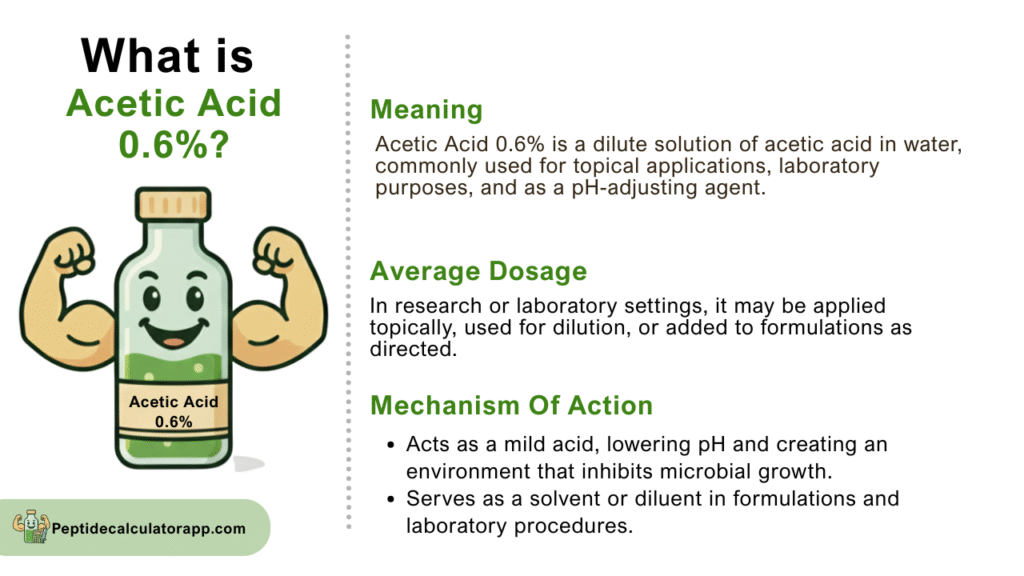
Acetic Acid 0.6% (3 mL) exerts its effects through multiple mechanisms of action. Primarily, it functions as a weak acid that can lower the pH of the local environment, creating conditions unfavorable for bacterial and fungal growth. The acidic environment disrupts microbial cell walls and interferes with essential metabolic processes, leading to antimicrobial effects.
The solution works by penetrating biofilms and reaching organisms that may be resistant to other treatments. The acid denatures proteins and disrupts cellular membranes, particularly effective against gram-positive bacteria, certain fungi, and some viruses. Additionally, the acidic environment promotes tissue healing by stimulating natural immune responses and enhancing the activity of certain enzymes involved in wound repair.
When applied topically or used in irrigation procedures, Acetic Acid 0.6% (3 mL) creates a localized acidic environment that persists long enough to achieve therapeutic effects while being dilute enough to avoid significant tissue damage.
Benefits of Acetic Acid 0.6% (3 mL)
Antimicrobial Efficacy
Acetic Acid 0.6% (3 mL) provides broad-spectrum antimicrobial activity, effectively targeting bacteria, fungi, and certain viruses. This makes it a versatile option for various wound care and infection control applications.
Resistance and Safety Profile
The solution carries a low risk of promoting bacterial resistance, offering a safer long-term option compared to some specialized antimicrobials. Minimal systemic absorption further enhances its safety profile when used topically.
Cost-Effectiveness and Compatibility
Acetic Acid 0.6% is a cost-effective treatment, providing strong antimicrobial effects without the expense of more specialized medications. Its compatibility with most wound care protocols and ability to retain activity in the presence of organic matter make it particularly valuable in clinical settings.
Dosage and Administration
The dosage and administration of Acetic Acid 0.6% (3 mL) depend on the specific indication and route of administration. For topical applications, the solution can be applied directly to affected areas using sterile gauze or cotton swabs. The frequency of application typically ranges from once daily to three times daily, depending on the severity of the condition and patient response.
For irrigation procedures, the entire 3 mL volume may be used, or it may be diluted further with sterile saline if required. Healthcare professionals should follow institutional protocols and consider individual patient factors when determining appropriate dosing regimens.
Administration guidelines include:
- Use sterile technique when handling and applying the solution
- Avoid contact with healthy surrounding tissue when possible
- Monitor patient response and adjust frequency as needed
- Document application times and patient reactions
Storage and Stability
Proper storage of Acetic Acid 0.6% (3 mL) is crucial for maintaining its stability and effectiveness. The solution should be stored at room temperature, typically between 15-25°C (59-77°F), in a dry place away from direct sunlight. The container should be tightly sealed when not in use to prevent evaporation and contamination.
The solution maintains its stability for extended periods when stored properly. However, users should check the expiration date and inspect the solution for any changes in color, clarity, or odor before use. Any solution showing signs of contamination or degradation should be discarded immediately.
Storage considerations include:
- Keep in original container with tight closure
- Protect from freezing temperatures
- Store away from incompatible chemicals
- Use single-dose vials within recommended timeframes after opening
Potential Side Effects
Local Irritation
Acetic Acid 0.6% (3 mL) is generally well-tolerated, but some users may experience mild local irritation, a burning sensation, or temporary discomfort at the application site. These effects are usually short-lived and resolve shortly after use.
Serious but Rare Effects
Although uncommon, more severe reactions can occur. These may include chemical burns from improper use, allergic reactions in sensitive individuals, tissue damage from prolonged contact or higher concentrations, and delayed wound healing in certain cases.Healthcare providers should educate patients about proper use and potential warning signs.
FAQs
Q1. How often can Acetic Acid 0.6% (3 mL) be applied?
Ans: Application frequency depends on the specific condition and patient response, typically ranging from once to three times daily as directed by a healthcare provider.
Q2. Can this solution be used on open wounds?
Ans: Yes, Acetic Acid 0.6% (3 mL) can be used on open wounds under medical supervision, but proper wound assessment and monitoring are essential.
Q3. Is it safe for long-term use?
Ans: Long-term use should be under medical supervision, with regular monitoring for effectiveness and potential adverse effects.
Q4. Can it be mixed with other medications?
Ans: Compatibility with other medications should be verified with a healthcare provider or pharmacist before mixing.
Final Thoughts
Acetic Acid 0.6% (3 mL) represents a valuable therapeutic option in modern healthcare, offering effective antimicrobial properties with a favorable safety profile. Its broad-spectrum activity, cost-effectiveness, and low resistance potential make it an important tool in treating various conditions, particularly in cases where conventional antimicrobials may be ineffective or unsuitable.
The success of treatment with Acetic Acid 0.6% (3 mL) depends on proper patient selection, appropriate administration, and careful monitoring. Healthcare providers should consider this solution as part of a comprehensive treatment approach, potentially in combination with other therapies when appropriate.
As research continues to evolve, the role of acetic acid solutions in clinical practice may expand, offering new opportunities for effective, affordable healthcare solutions. Patients and healthcare providers should work together to determine the most appropriate treatment strategies based on individual needs and circumstances.