
Humanin is a 24-amino acid peptide that was first discovered in the brain tissue of patients with Alzheimer’s disease. This mitochondrial-derived peptide is encoded by a short open reading frame in the mitochondrial 16S ribosomal RNA gene. What makes Humanin particularly intriguing is its natural decline with age, suggesting a crucial role in the aging process and age-related diseases.
The peptide exists in several forms, with the most studied being Humanin-G (HNG), which contains a glycine substitution that enhances its stability and biological activity. Humanin is found naturally in various tissues throughout the body, including the brain, heart, liver, and skeletal muscle, where it serves as a cellular guardian against multiple forms of stress.
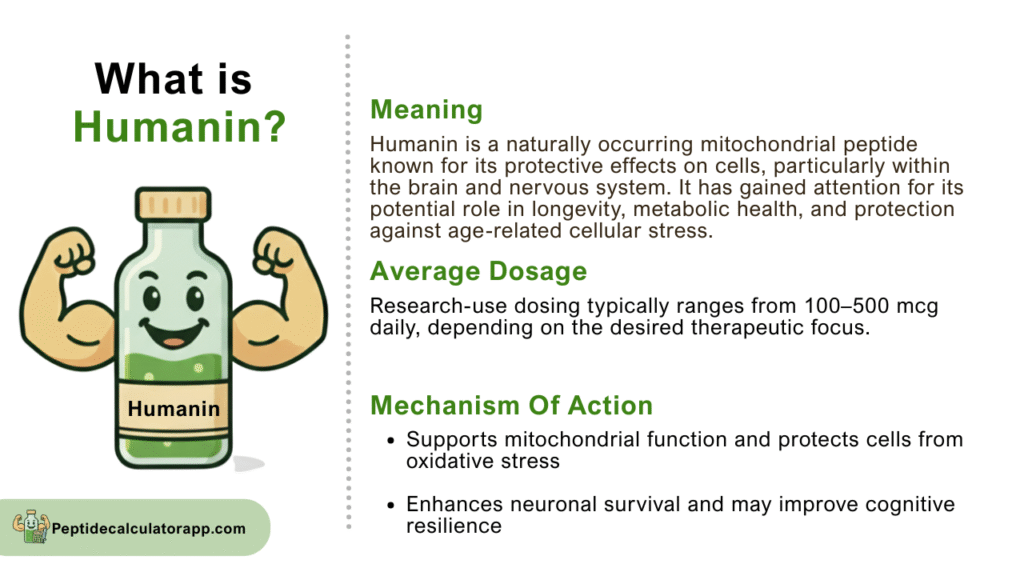
How Humanin Works?
Humanin operates through several sophisticated mechanisms that contribute to cellular protection and survival. The peptide primarily works by binding to specific receptors and interacting with key cellular pathways involved in apoptosis, metabolism, and stress response.
One of Humanin’s primary mechanisms involves the inhibition of pro-apoptotic proteins, particularly those in the Bcl-2 family. By preventing excessive cell death, Humanin helps maintain tissue integrity and function. The peptide also activates survival signaling pathways, including the PI3K/Akt pathway, which promotes cell survival and growth.
Additionally, Humanin influences mitochondrial function by enhancing mitochondrial biogenesis and improving energy metabolism. This mitochondrial protection is crucial for maintaining cellular health, as mitochondrial dysfunction is implicated in numerous age-related diseases and the aging process itself.
Benefits of Humanin
Neuroprotective Effects
One of the most extensively studied benefits of Humanin is its powerful neuroprotective activity. Research shows that Humanin protects neurons from multiple forms of cellular damage, including oxidative stress, inflammation, and the accumulation of toxic proteins associated with neurodegenerative diseases. These effects make Humanin a promising therapeutic candidate for preserving cognitive function and potentially slowing the progression of conditions such as Alzheimer’s and Parkinson’s disease.
Cardiovascular Support
Humanin also demonstrates meaningful cardiovascular benefits. Studies indicate that it may protect the heart and vascular system from ischemia-reperfusion injury, a type of damage that occurs when blood flow is restored after a period of oxygen deprivation. Additionally, Humanin appears to improve endothelial function and reduce inflammatory markers within blood vessels, supporting overall cardiovascular health and resilience.
Metabolic Enhancement
Humanin has shown strong potential in improving metabolic function. Its effects include enhanced insulin sensitivity, better glucose utilization, and improvements in lipid profiles. These metabolic benefits suggest that Humanin may play a valuable role in supporting individuals with insulin resistance, metabolic syndrome, or early-stage type 2 diabetes. Like BPC-157, Humanin contributes to systemic health and tissue optimization, but it operates through its own unique mitochondrial-related pathways.
Anti-Aging and Cellular Protection
Humanin is often highlighted for its anti-aging properties. As a mitochondrial-derived peptide, it contributes to cellular protection, longevity pathways, and improved stress resistance at the cellular level. These actions may support healthier aging by preserving cellular function, reducing inflammation, and enhancing overall resilience to metabolic and oxidative stress.
Dosage and Administration
Humanin dosage protocols vary depending on the intended application and individual factors. Research studies have typically used doses ranging from 2-10 mg administered subcutaneously, though optimal dosing for specific conditions continues to be investigated.
For general health optimization, many practitioners recommend starting with lower doses of 2-5 mg administered 2-3 times per week. The peptide can be administered subcutaneously using insulin syringes, similar to other peptide therapies. Timing of administration may vary, with some protocols suggesting morning administration to align with natural circadian rhythms.
It’s important to note that Humanin should be reconstituted with bacteriostatic water and used according to proper sterile techniques. Individual responses may vary, and dosage adjustments should be made based on monitoring and professional guidance.
Storage and Stability
Proper storage of Humanin is crucial for maintaining its potency and effectiveness. In its lyophilized (freeze-dried) form, Humanin should be stored in a freezer at -20°C or colder, where it can remain stable for extended periods when kept away from light and moisture.
Once reconstituted with bacteriostatic water, Humanin should be stored in a refrigerator at 2-8°C and used within 30 days for optimal potency. The reconstituted solution should be protected from light and stored in sterile vials to prevent contamination.
Temperature fluctuations should be minimized during storage, and the peptide should never be frozen once reconstituted, as this can damage its structure and reduce effectiveness. Proper handling and storage protocols ensure that users receive the full therapeutic benefits of this valuable peptide.
Potential Side Effects
General Tolerability
Humanin is considered highly well-tolerated in research and experimental settings, with very few adverse effects reported. Most reactions, when they occur, are mild and tend to resolve without intervention.
Injection Site Reactions
The most common side effects are localized to the injection site. These may include temporary redness, slight swelling, or mild irritation. Such reactions are typically short-lived and diminish as the body becomes accustomed to the peptide.
Systemic Effects
Some individuals may notice mild fatigue or slight changes in sleep patterns during the early stages of use. These effects generally improve as treatment continues. Rare reports include mild headaches or minor gastrointestinal discomfort, both of which are uncommon and usually temporary.
Precautions and Safety Considerations
Although Humanin appears safe in short-term research contexts, individuals with autoimmune conditions, those who are pregnant, or those managing serious medical issues should avoid use unless guided by a healthcare professional. Because long-term safety data is still limited, Humanin should be used responsibly and ideally under medical supervision to ensure proper monitoring and risk management.
FAQs
Q1. How long does it take to see results from Humanin?
Ans: Results from Humanin supplementation can vary significantly among individuals. Some users report improved energy and cognitive clarity within 2-4 weeks, while more substantial benefits may take 8-12 weeks of consistent use to become apparent.
Q2. Can Humanin be combined with other peptides?
Ans: Humanin can potentially be combined with other peptides, though this should be done under professional guidance. Each combination requires careful consideration of potential interactions and dosage adjustments.
Q3. Is Humanin suitable for long-term use?
Ans: While current research suggests Humanin is well-tolerated, long-term safety data remains limited. Most protocols recommend cyclical use with periodic breaks to assess ongoing benefits and minimize potential risks.
Q4. What makes Humanin different from other neuroprotective compounds?
Ans: Humanin’s unique mitochondrial origin and multiple mechanisms of action distinguish it from other neuroprotective compounds. Its natural occurrence in the body and specific receptor interactions provide targeted cellular protection.
Final Thoughts
Humanin represents an exciting frontier in peptide therapy, offering unique benefits for cellular protection, neuroprotection, and healthy aging. Its natural occurrence in the body and well-documented mechanisms of action make it an attractive option for those seeking evidence-based approaches to health optimization.
While research continues to unfold the full potential of this remarkable peptide, current evidence suggests significant promise for various therapeutic applications. As with any advanced therapy, proper medical supervision, quality sourcing, and adherence to established protocols are essential for safe and effective use.
The future of Humanin research holds great promise, with ongoing studies exploring its potential in treating age-related diseases, enhancing cognitive function, and promoting longevity. For individuals considering Humanin therapy, thorough research and professional guidance will help ensure optimal outcomes while minimizing potential risks.