
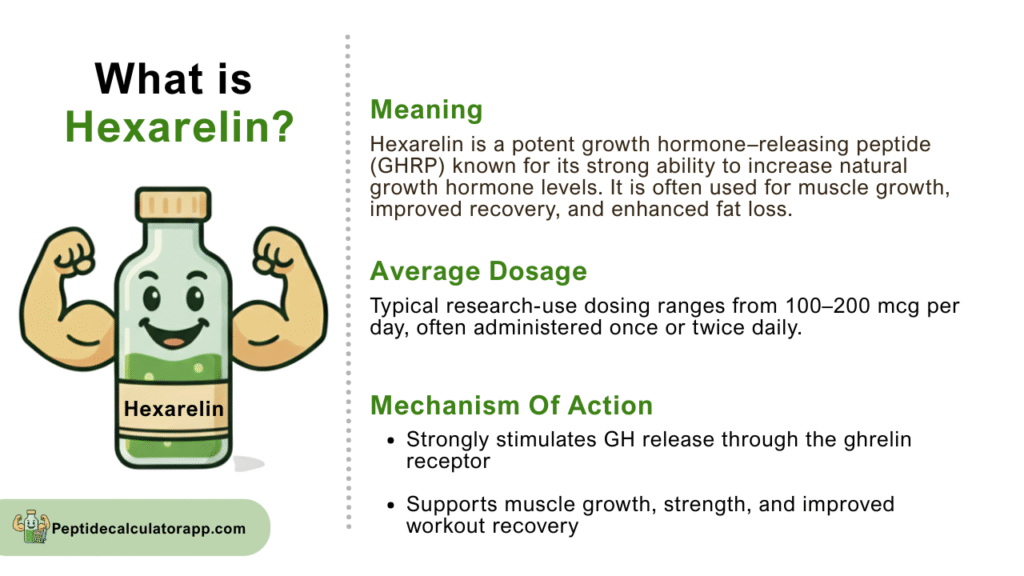
Hexarelin is a synthetic hexapeptide composed of six amino acids that belongs to the growth hormone secretagogue family. Originally developed in the 1990s, this peptide has been extensively studied for its ability to stimulate the release of growth hormone from the pituitary gland. Unlike other peptides in its class, Hexarelin demonstrates exceptional potency and bioavailability, making it a subject of considerable scientific interest.
The peptide’s chemical structure allows it to cross the blood-brain barrier effectively, enabling direct interaction with growth hormone-releasing hormone receptors in the hypothalamus and pituitary gland. This unique characteristic sets Hexarelin apart from many other growth hormone-releasing compounds and contributes to its remarkable efficacy in research settings.
How Hexarelin Works?
Hexarelin operates through a sophisticated mechanism that involves multiple pathways within the endocrine system. The primary mechanism involves binding to ghrelin receptors, also known as growth hormone secretagogue receptors (GHS-R), located in the hypothalamus and pituitary gland. Upon binding, Hexarelin triggers a cascade of molecular events that ultimately leads to the release of growth hormone.
The peptide also influences the release of other hormones, including insulin-like growth factor-1 (IGF-1), which plays a crucial role in mediating many of growth hormone’s effects throughout the body. Additionally, Hexarelin has been shown to affect cortisol and prolactin levels, though these effects are generally considered secondary to its primary growth hormone-releasing action.
What makes Hexarelin particularly interesting is its ability to maintain efficacy even with repeated administration, showing less desensitization compared to other peptides in its class. This sustained effectiveness is attributed to its unique receptor binding profile and its ability to stimulate both hypothalamic and pituitary pathways simultaneously.
Benefits of Hexarelin
Muscle and Body Composition Support
Hexarelin’s primary benefits arise from its ability to stimulate growth hormone release. This increase in growth hormone can enhance muscle protein synthesis, potentially supporting gains in lean muscle mass and improving overall body composition. These effects make it a notable candidate in research focused on performance, recovery, and musculoskeletal health.
Cardiovascular Protection
Research has highlighted several promising cardiovascular benefits. Hexarelin has demonstrated the potential to improve cardiac function and may provide protective effects against certain forms of heart damage. These findings have positioned it as an interesting subject in studies on cardiovascular repair and recovery.
Healing and Regeneration
Hexarelin has shown encouraging results in wound healing and tissue repair, aligning it with other regenerative peptides such as BPC-157—though the mechanisms differ. These properties suggest possible applications in injury recovery and tissue regeneration research.
Sleep, Cognition, and Metabolic Health
Additional studies exploring Hexarelin’s systemic effects have noted potential improvements in sleep quality, recovery after intense physical stress, and aspects of cognitive function. Early findings also point to possible benefits in metabolic health, though these effects require further investigation to be fully understood.
Dosage and Administration
In research settings, Hexarelin is typically administered through subcutaneous injection, with dosages commonly ranging from 100 to 300 micrograms per administration. The timing of administration is crucial, as the peptide is most effective when taken on an empty stomach, typically 30-60 minutes before meals or before bedtime.
Research protocols often involve administration 2-3 times daily, with careful attention to timing to maximize the peptide’s effectiveness while minimizing potential interference with natural growth hormone rhythms. Some studies have explored pulsatile dosing regimens to better mimic natural growth hormone release patterns.
It’s important to note that dosing protocols can vary significantly depending on the specific research objectives and individual subject characteristics. Researchers must carefully consider factors such as body weight, age, and overall health status when designing administration protocols.
Storage and Stability
Proper storage of Hexarelin is critical for maintaining its stability and effectiveness. In its lyophilized (freeze-dried) form, the peptide should be stored in a refrigerator at temperatures between 2-8°C (36-46°F). Under these conditions, lyophilized Hexarelin can remain stable for extended periods, typically 12-24 months when stored properly.
Once reconstituted with bacteriostatic water or sterile water, the peptide’s stability decreases significantly. Reconstituted solutions should be stored in the refrigerator and used within 7-14 days for optimal potency. Freezing reconstituted solutions is not recommended, as this can lead to peptide degradation and loss of biological activity.
Light exposure should be minimized, and the peptide should be stored in its original packaging or in amber vials to protect against photodegradation. Researchers should always inspect reconstituted solutions for any signs of precipitation, cloudiness, or discoloration before use, as these may indicate degradation.
Potential Side Effects
Fluid Retention and Musculoskeletal Discomfort
One of the most commonly reported side effects of Hexarelin is water retention, which can cause temporary weight gain and mild swelling. Some individuals may also experience joint discomfort or muscle aches, particularly during the early stages of use. These effects are generally transient and tend to diminish as the body adapts.
Increased Appetite
Hexarelin’s interaction with ghrelin receptors can stimulate hunger, leading to a noticeable increase in appetite. This effect is well-documented and aligns with the peptide’s mechanism of action on pathways related to hunger regulation.
Metabolic and Hormonal Effects
More significant side effects may involve changes in blood glucose levels, requiring careful attention in individuals sensitive to fluctuations in insulin or glucose metabolism. Hexarelin may also influence cortisol rhythms, which can have broader implications for stress response and overall hormonal balance.
FAQs
Q1. How does Hexarelin compare to other growth hormone-releasing peptides?
Ans: Hexarelin is considered one of the most potent growth hormone-releasing peptides available, with studies showing it to be several times more effective than earlier compounds in its class. Its unique receptor binding profile and sustained effectiveness set it apart from other peptides.
Q2. Can Hexarelin be used in combination with other peptides?
Ans: Research has explored various combination protocols, though these require careful consideration of potential interactions and synergistic effects. Any combination therapy should only be conducted under appropriate research supervision with proper monitoring protocols.
Q3. How long does it take to see effects from Hexarelin?
Ans: Research indicates that acute effects on growth hormone levels can be observed within hours of administration, while longer-term effects on body composition and other parameters may take weeks to months to become apparent.
Q4. Is Hexarelin suitable for long-term research?
Ans: Long-term studies have been conducted, though concerns about potential desensitization and antibody development suggest that cycling or pulsatile protocols may be preferable for extended research periods.
Final Thoughts
Hexarelin represents a significant advancement in growth hormone-releasing peptide research, offering unique properties and potent effects that continue to drive scientific interest. Its complex mechanism of action and diverse potential applications make it a valuable tool for researchers investigating growth hormone pathways and related therapeutic targets.
As research continues to evolve, Hexarelin’s role in the broader landscape of peptide therapeutics becomes increasingly clear. Its sustained effectiveness and unique receptor profile position it as an important compound for future research endeavors, particularly in areas related to growth hormone deficiency, cardiovascular health, and age-related conditions.
The ongoing development of research protocols and safety guidelines will be crucial for maximizing the scientific value of Hexarelin research while ensuring appropriate safety standards. As with all research compounds, continued vigilance and adherence to established protocols remain essential for advancing our understanding of this remarkable peptide.