
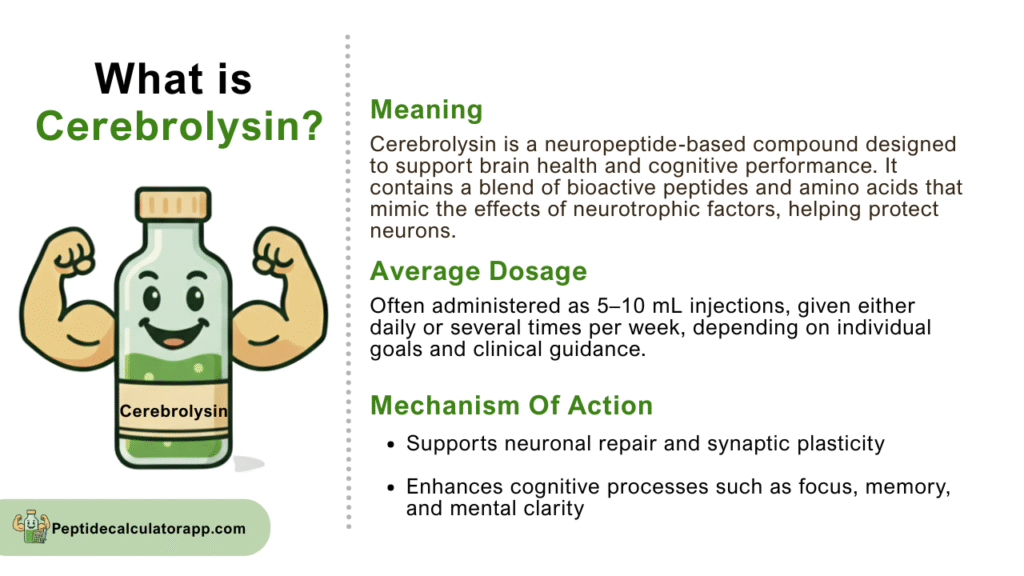
Cerebrolysin is a complex mixture of low-molecular-weight peptides and amino acids derived from porcine brain tissue. It contains neurotrophic factors, including brain-derived neurotrophic factor (BDNF), ciliary neurotrophic factor (CNTF), nerve growth factor (NGF), and glial cell line-derived neurotrophic factor (GDNF). These bioactive compounds work synergistically to support neuronal survival, growth, and differentiation.
The preparation is standardized to ensure consistent therapeutic potency and is administered as an injectable solution. Cerebrolysin has been extensively studied and is approved in several countries for the treatment of stroke, traumatic brain injury, and dementia. Its unique composition mimics the natural neurotrophic environment of the brain, making it a valuable tool in neurological therapy.
How Cerebrolysin Works?
Cerebrolysin’s mechanism of action is multifaceted and involves several key neurobiological processes. The peptides and neurotrophic factors in Cerebrolysin cross the blood-brain barrier effectively, allowing direct interaction with brain tissue. Once in the brain, these compounds promote neuroplasticity by enhancing synaptic connectivity and supporting the formation of new neural pathways.
The neurotrophic factors present in Cerebrolysin stimulate neurogenesis, the process by which new neurons are generated in the brain. This is particularly important in areas affected by injury or degenerative processes. Additionally, Cerebrolysin exhibits neuroprotective properties by reducing oxidative stress, inflammation, and apoptotic cell death in neurons.
The preparation also enhances protein synthesis in brain cells, supporting the production of essential proteins required for neuronal function and repair. This comprehensive approach to brain health makes Cerebrolysin effective in addressing multiple aspects of neurological dysfunction simultaneously.
Benefits of Cerebrolysin
Enhanced Stroke Recovery
Clinical research demonstrates that Cerebrolysin can significantly improve functional outcomes in stroke patients. Benefits include enhanced motor recovery, improved cognitive function, and reduced neurological impairment. By limiting the extent of brain damage and supporting neuroplasticity, Cerebrolysin accelerates rehabilitation and helps patients regain lost abilities more efficiently.
Improved Outcomes in Traumatic Brain Injury (TBI)
For individuals recovering from traumatic brain injury, Cerebrolysin has shown promising neuroprotective effects. Studies indicate improvements in consciousness levels, reduced intracranial pressure, and better overall neurological recovery. Its ability to limit secondary brain damage—a major contributor to long-term impairment—makes it a valuable therapeutic option in TBI management.
Support for Dementia and Alzheimer’s Disease
Cerebrolysin has demonstrated potential benefits in slowing cognitive decline in patients with dementia, including Alzheimer’s disease. Improvements in memory, attention, and daily functioning have been observed, contributing to an enhanced quality of life. Much like how BPC-157 aids tissue regeneration, Cerebrolysin supports neural repair by promoting neurotrophic activity within the brain.
Cognitive and Mood Enhancement
Beyond clinical conditions, Cerebrolysin may improve mood stability, enhance learning capacity, and support overall cognitive performance. Its neuroprotective and neuroregenerative effects make it a candidate for maintaining brain health, particularly in aging populations or those recovering from neurological injury.
Dosage and Administration
Cerebrolysin is administered through intravenous infusion, typically in a clinical setting under medical supervision. The standard dosage ranges from 10 to 50 mL per day, depending on the specific condition being treated and the patient’s individual needs. Treatment protocols usually involve daily infusions for 10 to 20 days, followed by maintenance therapy or repeated cycles as determined by the treating physician.
For acute conditions such as stroke or traumatic brain injury, higher doses and more frequent administration may be recommended during the initial treatment phase. Chronic conditions like dementia often require longer treatment courses with periodic evaluations to assess therapeutic response.
The infusion process typically takes 15 to 60 minutes, depending on the prescribed dose and dilution. Cerebrolysin is usually diluted in normal saline or other compatible intravenous solutions to ensure proper administration and patient comfort.
Storage and Stability
Proper storage of Cerebrolysin is crucial for maintaining its therapeutic efficacy. The preparation should be stored in a refrigerator at temperatures between 2°C and 8°C (36°F to 46°F). It must be protected from light and should not be frozen, as this can damage the delicate peptide structures.
Unopened vials of Cerebrolysin have a shelf life of approximately 3 years when stored under proper conditions. Once opened or diluted for infusion, the solution should be used immediately or within the timeframe specified by the manufacturer, typically within 24 hours when refrigerated.
Healthcare providers should inspect the solution before administration, ensuring it remains clear and free from particulates or discoloration. Any changes in appearance may indicate degradation and the solution should not be used.
Potential Side Effects
Injection Site Reactions
Cerebrolysin is generally well-tolerated, but some patients may experience mild reactions at the injection or infusion site. These can include redness, warmth, or slight discomfort. Such effects are usually short-lived and do not interfere with treatment.
Mild Systemic Symptoms
A small number of patients may develop mild systemic side effects such as headache, dizziness, nausea, or fatigue. These symptoms are typically temporary and resolve on their own without medical intervention. Adjusting infusion speed or timing may help minimize these reactions.
Allergic Responses
Although rare, allergic reactions can occur. These may present as skin rashes, itching, or in severe cases, hypersensitivity reactions that require immediate medical attention. Because Cerebrolysin is derived from porcine brain tissue, patients with known pork allergies should exercise caution. A thorough medical history—and, if necessary, allergy testing—should be completed before starting therapy to ensure safe use.
FAQs
Q1. How long does it take to see results from Cerebrolysin treatment?
Ans: Results can vary depending on the condition being treated and individual patient factors. Some patients may notice improvements within the first few weeks of treatment, while others may require several cycles to achieve optimal benefits.
Q2. Can Cerebrolysin be used in combination with other medications?
Ans: Yes, Cerebrolysin can typically be used alongside other neurological medications. However, it’s essential to inform your healthcare provider about all medications and supplements you’re taking to avoid potential interactions.
Q3. Is Cerebrolysin safe for long-term use?
Ans: Clinical studies have shown Cerebrolysin to be safe for extended treatment periods when administered under proper medical supervision. Long-term safety profiles continue to be monitored through ongoing research.
Q4. Are there any dietary restrictions during Cerebrolysin treatment?
Ans: Generally, no specific dietary restrictions are required during Cerebrolysin therapy. However, maintaining a healthy, balanced diet can support overall neurological health and treatment outcomes.
Final Thoughts
Cerebrolysin represents a significant advancement in neurological therapeutics, offering hope for patients with various brain-related conditions. Its unique composition of neurotrophic factors and peptides provides a comprehensive approach to brain health that addresses multiple aspects of neurological dysfunction.
While research continues to expand our understanding of Cerebrolysin’s therapeutic potential, current evidence supports its efficacy in treating stroke, traumatic brain injury, and dementia. As with any medical treatment, consultation with qualified healthcare professionals is essential to determine if Cerebrolysin therapy is appropriate for individual circumstances.