
YK-11 (SARM) is a synthetic compound that was originally developed by Japanese researchers in 2011. Unlike traditional SARMs, YK-11 possesses a unique chemical structure that combines characteristics of both SARMs and myostatin inhibitors. This dual action makes it particularly interesting for researchers studying muscle growth and development.
The compound is classified as a partial agonist of the androgen receptor, meaning it can both activate and inhibit androgen receptor signaling depending on the cellular context. This selective action is what distinguishes YK-11 from anabolic steroids, which typically activate androgen receptors throughout the body indiscriminately.
YK-11 is not approved by the FDA for human consumption and remains an investigational compound used primarily in research settings. Its legal status varies by country, and it’s important to note that it’s banned by the World Anti-Doping Agency (WADA) for competitive sports.
How YK-11 Works?
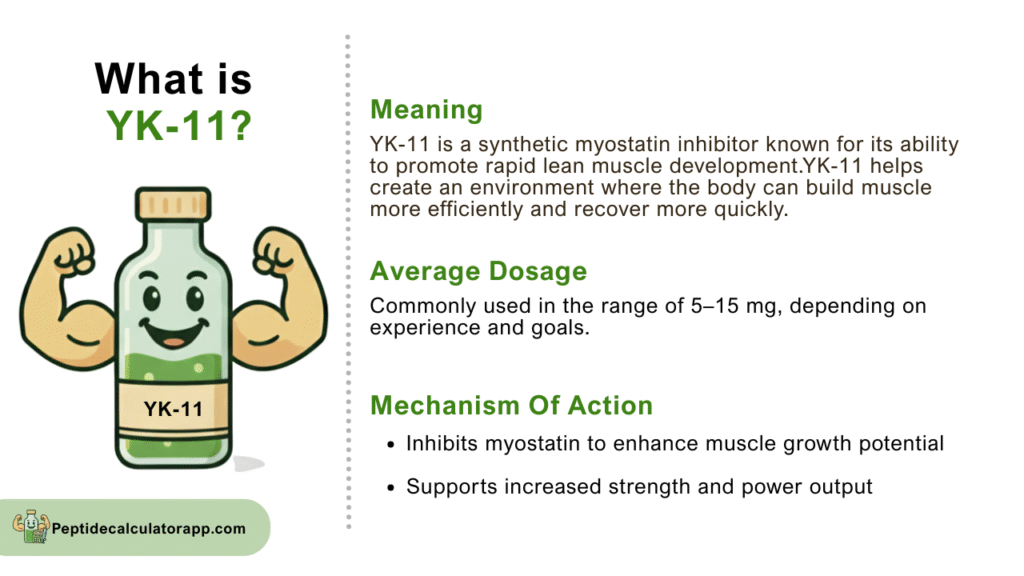
The mechanism of action of YK-11 (SARM) is multifaceted and involves several pathways that contribute to muscle growth and development. The primary mechanism involves selective binding to androgen receptors in muscle and bone tissue, which triggers anabolic processes without significantly affecting other organs.
What sets YK-11 apart from other SARMs is its ability to inhibit myostatin, a protein that naturally limits muscle growth. Myostatin acts as a negative regulator of muscle mass, essentially putting a brake on how much muscle the body can build. By inhibiting this protein, YK-11 may allow for enhanced muscle growth beyond normal physiological limits.
Additionally, YK-11 appears to increase follistatin production, which further contributes to myostatin inhibition. This cascade effect creates an environment more conducive to muscle protein synthesis and growth. The compound also influences the expression of various genes involved in muscle development and maintenance.
Research suggests that YK-11 may also have positive effects on bone density through its interaction with androgen receptors in bone tissue, potentially making it beneficial for bone health research.
Benefits of YK-11
Based on preliminary research and anecdotal reports, YK-11 (SARM) may offer several potential benefits.
Muscle Growth Enhancement
The primary benefit associated with YK-11 is its potential to promote significant muscle growth through its dual action as a SARM and myostatin inhibitor. Users often report substantial gains in lean muscle mass during research cycles.
Strength Improvements
Along with muscle growth, YK-11 may contribute to increased strength and power output. This is likely related to both the increased muscle mass and the enhanced muscle fiber quality that may result from myostatin inhibition.
Fat Loss Support
Some studies suggest that YK-11 may help with body composition changes by promoting lean muscle growth while potentially supporting fat loss, though this effect appears to be secondary to its muscle-building properties.
Similar to other research compounds like BPC-157, YK-11 represents an area of active scientific investigation with potential therapeutic applications.
Dosage and Administration
YK-11 (SARM) dosage protocols in research settings vary significantly based on the specific research objectives and population being studied. It’s important to note that there are no established safe dosages for human use, as YK-11 remains an investigational compound.
In research contexts, dosages typically range from 5mg to 15mg per day, with some studies exploring higher doses. The compound has a relatively short half-life of approximately 6-10 hours, which often necessitates multiple daily administrations to maintain stable blood levels.
Research cycles typically last 6-8 weeks, followed by appropriate washout periods. Some researchers implement split dosing schedules, administering the compound twice daily to optimize blood levels and minimize potential side effects.
Due to its potent nature and unique mechanism of action, many research protocols start with lower doses to assess tolerance before potentially increasing to higher doses. Proper monitoring and documentation are essential components of any research involving YK-11.
Storage and Stability
Proper storage of YK-11 (SARM) is crucial for maintaining its stability and potency throughout research studies. The compound should be stored in a cool, dry place away from direct sunlight and heat sources.
Temperature control is particularly important, with storage at room temperature (20-25°C) being generally acceptable for short-term storage. For longer-term storage, refrigeration at 2-8°C may help preserve the compound’s integrity.
YK-11 should be kept in its original container with the lid tightly sealed to prevent moisture absorption and contamination. The compound is sensitive to light and should be stored in opaque containers when possible.
When properly stored, YK-11 typically maintains its stability for 2-3 years from the date of manufacture. However, researchers should always verify the expiration date and conduct appropriate testing to ensure compound integrity before use in studies.
Potential Side Effects
As an investigational compound, YK-11 (SARM) carries potential risks and side effects that researchers must carefully consider.
Hormonal Disruption
YK-11 may suppress natural testosterone production, particularly during longer research cycles or at higher doses. This can lead to various hormonal imbalances that may require monitoring and management.
Liver Stress
Some research suggests that YK-11 may cause mild to moderate liver stress, as indicated by elevated liver enzymes in some studies. Regular monitoring of liver function is recommended during research protocols.
Hair Loss
Due to its androgenic properties, YK-11 may accelerate hair loss in individuals predisposed to male pattern baldness.
FAQs
Q1. Is YK-11 actually a SARM?
While YK-11 is often classified as a SARM, it has a unique structure that combines characteristics of both SARMs and myostatin inhibitors. This dual nature makes it distinct from traditional SARMs like ostarine or ligandrol.
Q2. How long does YK-11 stay in the system?
YK-11 has a relatively short half-life of approximately 6-10 hours. However, detection times may be longer, and the compound may be detectable in drug tests for several weeks after last use.
Q3. Can YK-11 be stacked with other compounds?
In research settings, YK-11 has been studied both as a standalone compound and in combination with other research chemicals. However, any such combinations should only be undertaken by qualified researchers with appropriate safety protocols.
Q4. Does YK-11 require post-cycle therapy?
Research suggests that YK-11 may suppress natural hormone production, potentially necessitating appropriate recovery protocols in research studies. The specifics would depend on the research design and duration.
Q5. Is YK-11 legal?
YK-11’s legal status varies by country and jurisdiction. It’s not approved for human consumption by the FDA and is banned by WADA for competitive sports. Researchers should verify local regulations before obtaining or using YK-11.
Final Thoughts
YK-11 (SARM) represents a fascinating compound in the landscape of selective androgen receptor modulators, offering unique mechanisms of action that distinguish it from both traditional SARMs and anabolic steroids. Its dual action as an androgen receptor modulator and myostatin inhibitor makes it particularly intriguing for researchers studying muscle growth and development.
However, it’s crucial to approach YK-11 with appropriate caution and respect for its investigational status. The limited human research data means that much about its long-term effects and optimal usage parameters remains unknown. Like other research compounds, proper protocols and safety measures are essential for any legitimate research involving YK-11.
As research continues to evolve, YK-11 may eventually find its place in therapeutic applications, but for now, it remains firmly in the realm of research compounds requiring careful study and evaluation.