
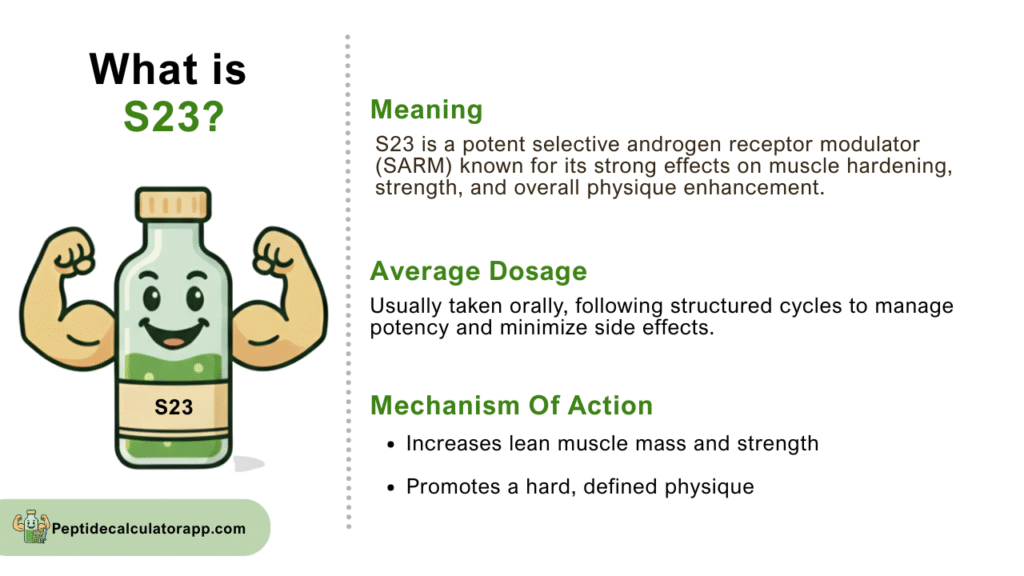
S23 is a selective androgen receptor modulator (SARM) originally developed by GTx Inc. as a potential male hormonal contraceptive. This orally bioavailable compound belongs to the class of non-steroidal SARMs and is known for its high binding affinity to androgen receptors. S23 (SARM) demonstrates exceptional potency, often considered one of the strongest SARMs available for research purposes.
The compound was initially investigated for its ability to suppress luteinizing hormone and follicle-stimulating hormone production, which could potentially serve as a reversible male contraceptive. However, researchers quickly discovered its powerful anabolic properties, leading to extensive studies on its muscle-building and fat-reducing capabilities.
S23 operates with remarkable selectivity, targeting specific tissues while minimizing unwanted effects on other organs. This selectivity distinguishes it from traditional anabolic steroids, which often cause widespread hormonal disruption throughout the body.
How S23 Works?
The mechanism of action of S23 (SARM) involves its selective binding to androgen receptors in muscle and bone tissues. Once bound, the compound activates specific genetic pathways that promote protein synthesis and muscle growth. This selective activation allows S23 to stimulate anabolic processes in target tissues while avoiding many of the adverse effects associated with broader hormonal compounds.
S23 demonstrates a unique dual mechanism, acting as both an androgen receptor agonist in muscle tissue and an antagonist in certain reproductive tissues. This dual action contributes to its effectiveness in building lean muscle mass while potentially affecting hormonal balance in specific ways.
The compound’s high oral bioavailability ensures efficient absorption and utilization by the body. Research indicates that S23 has a relatively short half-life, requiring multiple daily administrations to maintain stable blood levels. The metabolic pathway involves hepatic processing, with the compound being eliminated through standard liver detoxification mechanisms.
Benefits of S23 (SARM)
Lean Muscle Mass Development
Research indicates that S23 has a powerful ability to enhance lean muscle growth. It significantly increases muscle protein synthesis, which can lead to notable gains in both muscle size and strength. This makes S23 one of the more potent SARMs studied for muscle-building potential.
Fat Reduction and Improved Body Composition
S23 has shown promising effects on fat loss by boosting metabolic rate and encouraging the body to use stored fat for energy. This dual action of increasing muscle while reducing fat makes it particularly valuable for achieving body recomposition goals.
Enhanced Bone Density
Another important benefit of S23 is its positive impact on bone mineral density. Studies suggest that it may help strengthen bones and support skeletal health, making it relevant for research into conditions involving bone weakening or loss.
Improved Recovery and Reduced Fatigue
Many research subjects report faster recovery times and reduced muscle fatigue with S23. Its ability to support repair processes may help individuals recover more efficiently between training sessions. Similar to compounds like BPC-157, which are known for promoting healing, S23 may contribute to enhanced recovery pathways.
Dosage and Administration
Dosage protocols for S23 (SARM) vary significantly based on research objectives and individual factors. Typical research dosages range from 10mg to 30mg per day, with most studies utilizing doses in the 15-20mg range. Due to its short half-life of approximately 12 hours, researchers typically divide daily doses into two or three administrations throughout the day.
Beginning researchers often start with lower doses around 10mg daily to assess tolerance and response. More experienced researchers may utilize higher doses, but rarely exceed 30mg daily due to the compound’s potency. The timing of administration is crucial, with many researchers taking doses with meals to optimize absorption and minimize potential gastrointestinal effects.
Cycle length typically ranges from 8 to 12 weeks, with most researchers limiting initial cycles to 8 weeks to evaluate individual response. Post-cycle therapy considerations become important with S23 due to its potential impact on natural hormone production.
Storage and Stability
Proper storage of S23 (SARM) is essential for maintaining its stability and potency. The compound should be stored in a cool, dry environment away from direct sunlight and heat sources. Room temperature storage is generally acceptable for short-term use, but refrigeration can extend shelf life for long-term storage.
Moisture represents the primary threat to S23 stability, making airtight containers essential. Desiccant packets can provide additional moisture protection in humid environments. The compound typically maintains stability for 2-3 years when stored properly.
Liquid formulations require special attention to storage conditions, as they may be more susceptible to degradation than powder forms. Regular visual inspection for changes in color, consistency, or odor can help identify potential degradation issues.
Potential Side Effects
Hormonal Suppression
One of the most significant concerns with S23 is its strong potential to suppress natural testosterone production. Research suggests that its suppressive effects may be more pronounced than those of other SARMs. This hormonal disruption can lead to decreased libido, reduced energy levels, and mood fluctuations. Post-cycle recovery often requires careful planning due to the extent of suppression.
Hair Loss
Some research subjects have reported increased hair shedding or accelerated male pattern baldness while using S23. This effect appears to be influenced by genetic predisposition and dosage. In many cases, hair-related changes improve after discontinuing the compound, though individual responses can vary.
Sleep Disturbances
Sleep-related side effects, including difficulty sleeping and night sweats, have been observed in some research settings. These disturbances are likely linked to hormonal fluctuations caused by S23 and may resolve when the dosage is adjusted or the compound is discontinued.
Liver Enzyme Elevation
Although generally less hepatotoxic than traditional oral steroids, S23 may still cause mild elevations in liver enzymes. This effect highlights the importance of periodic liver function testing during extended research use, particularly at higher doses or longer durations.
FAQs
Q1. How does S23 compare to other SARMs in terms of potency?
Ans: S23 is considered one of the most potent SARMs available, often producing effects comparable to mild anabolic steroids. Its potency exceeds most other SARMs, including RAD-140 and LGD-4033, but this increased potency comes with greater potential for side effects.
Q2. Can S23 be stacked with other research compounds?
Ans: Some researchers combine S23 with other compounds, though this approach requires careful consideration of potential interactions and cumulative effects. Stacking should only be attempted by experienced researchers with thorough understanding of each compound’s properties.
Q3. How long does it take to see results with S23?
Ans: Research indicates that noticeable effects from S23 typically begin within 1-2 weeks of consistent administration. Significant changes in body composition usually become apparent after 4-6 weeks of use.
Q4. Is post-cycle therapy necessary after S23 research?
Ans: Due to S23’s potential for hormonal suppression, many researchers implement post-cycle protocols to support natural hormone recovery. The necessity and extent of such protocols depend on dosage, cycle length, and individual response.
Q5. What makes S23 different from traditional steroids?
Ans: S23’s selective action on androgen receptors distinguishes it from traditional steroids, which affect multiple systems throughout the body. This selectivity potentially reduces certain side effects while maintaining anabolic benefits.
Final Thoughts
S23 (SARM) represents a powerful tool for researchers investigating selective androgen receptor modulation and its effects on muscle, bone, and metabolic processes. Its exceptional potency and unique mechanism of action make it valuable for specific research applications, particularly in body recomposition and muscle preservation studies.
However, the increased potency of S23 compared to other SARMs necessitates careful consideration of dosing protocols, monitoring requirements, and potential side effects. Researchers must weigh the compound’s benefits against its risks and ensure proper protocols are in place before beginning any research program.
As research continues to evolve, S23 may find applications in clinical settings for treating muscle wasting conditions and other health issues. Until then, it remains an important compound for advancing our understanding of selective androgen receptor modulation and its therapeutic potential.