

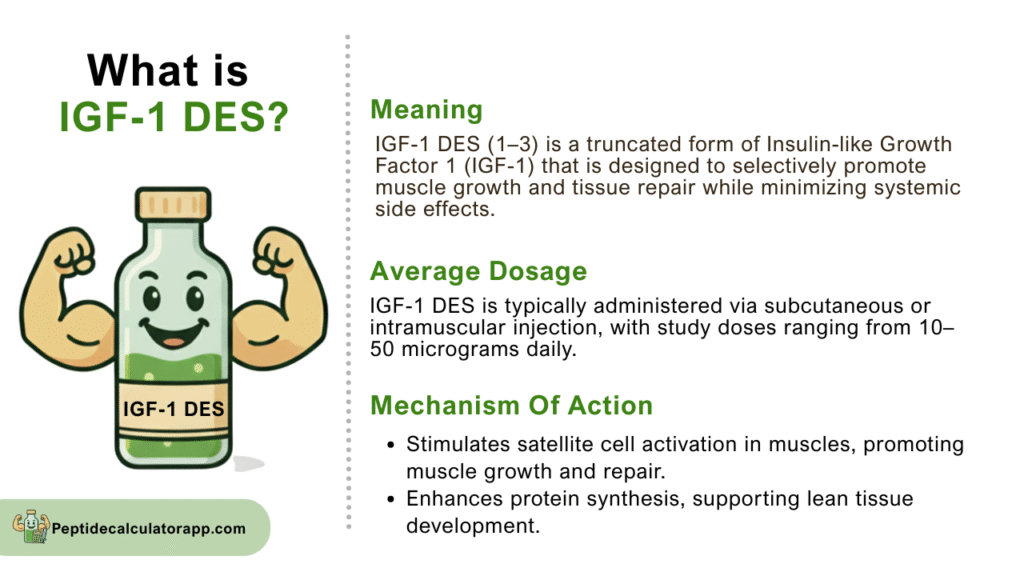
IGF-1 DES is a shortened analog of IGF-1 that lacks the first three amino acids (N-terminal tripeptide) found in the complete IGF-1 sequence. This structural modification results in a peptide that exhibits enhanced potency and altered binding characteristics compared to regular IGF-1. The “DES” designation refers to the deletion of these initial amino acids, creating a more bioactive form of the growth factor.
Unlike full-length IGF-1, IGF-1 DES demonstrates significantly reduced affinity for IGF binding proteins (IGFBPs), which typically limit the bioavailability of IGF-1 in the body. This characteristic allows IGF-1 DES to remain more active in tissues and potentially provide more pronounced effects at lower concentrations.
How IGF-1 DES Works?
IGF-1 DES functions by binding to IGF-1 receptors located throughout various tissues in the body. When it binds to these receptors, it initiates a cascade of intracellular signaling pathways that promote protein synthesis, cellular growth, and tissue repair. The primary pathways activated include the PI3K/Akt and MAPK signaling cascades, which are crucial for muscle growth and regeneration.
The reduced binding affinity to IGFBPs means that IGF-1 DES can more readily interact with target tissues. This enhanced bioavailability is particularly notable in muscle tissue, where it can stimulate satellite cell activation and proliferation. These satellite cells are essential for muscle repair and growth, making IGF-1 DES particularly interesting for applications related to muscle development and recovery.
Additionally, IGF-1 DES has been shown to promote glucose uptake in muscle cells and enhance protein synthesis rates. The peptide also influences the expression of various genes involved in muscle growth and metabolic processes, contributing to its overall anabolic effects.
Benefits of IGF-1 DES
Enhanced Muscle Growth
IGF-1 DES demonstrates enhanced muscle-building properties compared to regular IGF-1. Research suggests that its improved tissue penetration and reduced protein binding may allow for more effective promotion of lean muscle mass development.
Accelerated Recovery
The peptide has shown potential to accelerate tissue repair processes, which can reduce recovery time between training sessions or after injuries. This benefit is particularly valuable for athletes and individuals engaged in intensive physical training.
Improved Body Composition
IGF-1 DES may support fat oxidation while simultaneously promoting muscle protein synthesis. This dual action can enhance metabolic efficiency, allowing nutrients to be utilized for muscle growth rather than fat storage, potentially improving overall body composition.
Neurological Support
Preliminary research indicates that IGF-1 DES may aid nerve growth and regeneration. While more studies are needed, this property could have implications for recovery from neurological injuries and overall neural health.
Dosage and Administration
Dosage protocols for IGF-1 DES vary considerably based on individual factors, research objectives, and administration methods. Typical dosages in research settings range from 20 to 100 micrograms per day, though some studies have explored higher amounts. The peptide is commonly administered through subcutaneous injection, which allows for direct delivery into the systemic circulation.
Timing of administration appears to be crucial for optimizing effects. Many protocols suggest administering IGF-1 DES post-workout or in multiple smaller doses throughout the day to maintain stable levels. The peptide’s relatively short half-life necessitates frequent dosing to maintain therapeutic concentrations.
Cycle length typically ranges from 4 to 8 weeks in research protocols, followed by breaks to prevent potential receptor desensitization. Some researchers advocate for shorter, more frequent cycles to maintain sensitivity while minimizing potential adverse effects.
Storage and Stability
Proper storage of IGF-1 DES is critical for maintaining its stability and effectiveness. The peptide should be stored in lyophilized (freeze-dried) form at temperatures between 2-8°C (36-46°F) in a refrigerator. When stored correctly, lyophilized IGF-1 DES can remain stable for extended periods, typically 12-24 months.
Once reconstituted with bacteriostatic water or sterile water, the peptide becomes more susceptible to degradation. Reconstituted solutions should be stored in the refrigerator and used within 2-4 weeks for optimal potency. Freezing reconstituted solutions is not recommended as it can damage the peptide structure.
Protection from light and contamination is essential during storage. The peptide should be kept in its original vial with proper sealing, and sterile techniques should be employed during reconstitution and administration to prevent bacterial contamination.
Potential Side Effects
Hypoglycemia
One of the most significant potential side effects is low blood sugar. IGF-1 DES enhances glucose uptake by cells, which can sometimes lead to dangerous drops in blood glucose levels. Individuals using the peptide should monitor their blood sugar, especially if they have pre-existing metabolic conditions.
Joint Pain and Swelling
Joint discomfort, including pain and swelling, may occur, particularly with higher doses or prolonged use. These effects are likely related to fluid retention and the growth-promoting actions of IGF-1 DES on connective tissues.
Headaches and Fatigue
Some users report mild headaches, fatigue, or general discomfort during the initial phases of administration. These effects often diminish as the body adjusts to the peptide.
Long-Term Safety Considerations
Long-term safety data for IGF-1 DES is limited. Potential risks associated with chronic use are not fully understood, including theoretical concerns about promoting tumor growth due to IGF-1’s role in cellular proliferation. Direct evidence in healthy individuals is currently lacking.
Individual Variability
As with other research peptides such as BPC-157, individual responses to IGF-1 DES can vary significantly. Effects and tolerability may differ widely between users, emphasizing the importance of careful monitoring and personalized dosing protocols.
FAQs
Q1. How does IGF-1 DES differ from regular IGF-1?
Ans: IGF-1 DES lacks the first three amino acids found in full-length IGF-1, resulting in reduced binding to IGF binding proteins and enhanced bioavailability. This modification makes IGF-1 DES more potent and tissue-selective compared to regular IGF-1.
Q2. How long does it take to see effects from IGF-1 DES?
Ans: Effects from IGF-1 DES can potentially be observed within 1-2 weeks of consistent administration, though individual responses vary. Some users report initial changes in recovery and training capacity within the first week, while more significant body composition changes may take several weeks to manifest.
Q3. Can IGF-1 DES be combined with other peptides?
Ans: While some research has examined combination protocols, the safety and efficacy of combining IGF-1 DES with other compounds remain largely unstudied. Any combination approach should only be considered under appropriate medical supervision and with thorough understanding of potential interactions.
Q4. Is IGF-1 DES legal for personal use?
Ans: The legal status of IGF-1 DES varies by jurisdiction and intended use. In many areas, it is available for research purposes only and is not approved for human consumption. Users should verify local regulations and understand the legal implications before considering use.
Final Thoughts
IGF-1 DES represents an interesting advancement in peptide research, offering enhanced properties compared to native IGF-1. Its improved bioavailability and tissue selectivity make it a valuable tool for studying growth factor biology and potential therapeutic applications. However, the limited clinical data and potential side effects underscore the importance of careful consideration and appropriate supervision when exploring its use.
As research continues to evolve, our understanding of IGF-1 DES’s mechanisms, benefits, and risks will undoubtedly improve. For now, those interested in this peptide should approach it with realistic expectations, proper knowledge, and appropriate medical guidance to ensure safe and effective use.