
GHK-Cu is a small, naturally occurring copper-peptide complex consisting of the tripeptide glycyl-L-histidyl-L-lysine bound to a copper ion. First discovered in human plasma in 1973 by Dr. Loren Pickart, this peptide was initially identified for its role in wound healing and tissue repair. The copper component is essential for the peptide’s biological activity, as it facilitates various enzymatic processes crucial for cellular regeneration.
The peptide is naturally present in human plasma, saliva, and urine, with concentrations declining as we age. This age-related decrease has been linked to reduced healing capacity and increased signs of aging, making GHK-Cu supplementation an attractive therapeutic option. The molecular structure of GHK-Cu allows it to easily penetrate cellular membranes and interact with various biological targets throughout the body.
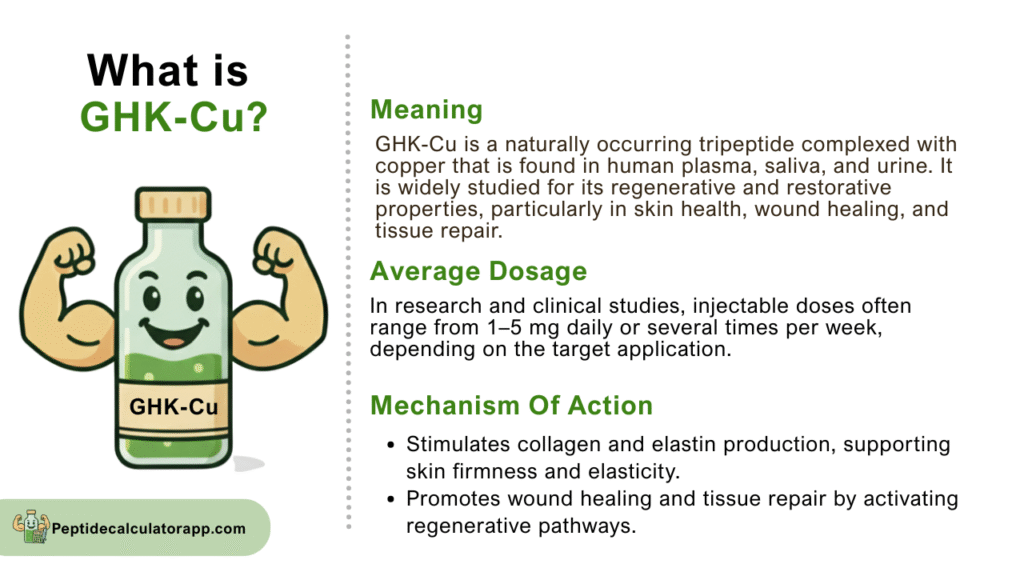
How GHK-Cu Works?
GHK-Cu operates through multiple interconnected pathways that collectively promote tissue regeneration and cellular health. The primary mechanism involves the copper ion acting as a cofactor for numerous enzymes essential for collagen synthesis, including lysyl oxidase and prolyl 4-hydroxylase. These enzymes are crucial for cross-linking collagen fibers, which provides structural integrity to tissues.
The peptide also modulates gene expression by influencing over 4,000 genes involved in various cellular processes. It upregulates genes responsible for tissue repair and regeneration while downregulating genes associated with inflammation and oxidative stress. This dual action creates an optimal environment for healing and regeneration.
Additionally, GHK-Cu stimulates the production of glycosaminoglycans, which are essential components of the extracellular matrix. It also promotes angiogenesis (formation of new blood vessels) by increasing the production of vascular endothelial growth factor (VEGF), ensuring adequate blood supply to healing tissues.
Benefits of GHK-Cu (Copper peptide)
Anti-Aging and Skin Health
GHK-Cu demonstrates strong anti-aging properties by stimulating collagen and elastin production. This leads to improved skin elasticity, reduced wrinkle depth, and enhanced skin texture. Users often notice visible improvements in skin firmness and overall appearance within weeks of consistent use.
Wound Healing and Tissue Repair
The peptide promotes cellular migration, proliferation, and differentiation, accelerating the healing process. Its anti-inflammatory properties help reduce excessive inflammation that can delay tissue repair. Similar to other regenerative peptides like BPC-157, GHK-Cu supports comprehensive tissue repair mechanisms.
Hair Restoration
GHK-Cu has been shown to stimulate hair follicle growth, increase hair thickness, and extend the growth phase of the hair cycle. This makes it a promising peptide for addressing hair thinning and promoting overall hair health.
Dosage and Administration
The optimal dosage of GHK-Cu varies depending on the intended application and delivery method. For topical applications in skincare, concentrations typically range from 0.05% to 2%, with higher concentrations reserved for professional treatments. Most over-the-counter products contain between 0.1% and 0.5% GHK-Cu, which provides effective results with minimal risk of irritation.
For injectable applications, dosages typically range from 1-5mg per injection, administered subcutaneously or intramuscularly. The frequency of administration varies from daily to weekly, depending on the specific treatment protocol and individual response. It’s crucial to work with a qualified healthcare provider when considering injectable GHK-Cu therapy.
Oral supplementation is less common but may be used in some protocols, typically at doses ranging from 5-20mg daily. However, oral bioavailability is lower compared to topical or injectable routes, making these methods generally preferred for therapeutic applications.
Treatment duration varies by indication, with cosmetic applications often requiring 8-12 weeks for optimal results, while wound healing applications may show benefits within days to weeks. Long-term use appears to be safe and may be necessary to maintain benefits.
Storage and Stability
Proper storage of GHK-Cu is essential to maintain its potency and effectiveness. The peptide should be stored in a cool, dry environment away from direct sunlight and heat sources. Refrigeration at 2-8°C (36-46°F) is recommended for reconstituted solutions, which can maintain stability for several weeks when properly stored.
Lyophilized (freeze-dried) GHK-Cu powder demonstrates greater stability and can be stored at room temperature for extended periods, though refrigeration is still preferred. The powder form should be protected from moisture and light, preferably in an airtight container with desiccant packets.
Once reconstituted with sterile water or bacteriostatic water, the solution should be used within the timeframe specified by the manufacturer, typically 2-4 weeks when refrigerated. Freezing reconstituted solutions is generally not recommended as it may affect the peptide’s structural integrity.
When purchasing GHK-Cu products, it’s important to verify proper storage conditions during shipping and to check expiration dates. Products that have been exposed to extreme temperatures or have exceeded their shelf life may have reduced efficacy.
Potential Side Effects
Topical Application Reactions
GHK-Cu is generally well-tolerated, with most side effects being mild and transient. Common reactions include temporary skin irritation, redness, or a mild burning sensation at the application site, especially when starting treatment or using higher concentrations.
Allergic Reactions
Though rare, allergic responses are possible, particularly in individuals with known copper sensitivities. Symptoms may include severe redness, swelling, itching, or rash. If such reactions occur, discontinue use immediately and consult a healthcare provider.
Injection Site Reactions
For injectable forms, mild pain, swelling, or bruising at the injection site may occur. These effects are typically temporary and resolve within a few days. Proper injection technique and sterile conditions are essential to minimize risks.
Special Considerations
Individuals with Wilson’s disease or other copper metabolism disorders should avoid GHK-Cu due to the risk of copper accumulation. Pregnant or breastfeeding women should consult with a healthcare provider before using GHK-Cu, as safety data in these populations is limited.
FAQs
Q1. How long does it take to see results from GHK-Cu treatment?
Results vary depending on the application and individual factors. For skin rejuvenation, initial improvements may be noticed within 2-4 weeks, with optimal results typically seen after 8-12 weeks of consistent use. Wound healing applications may show benefits within days to weeks, while hair restoration typically requires 3-6 months for noticeable changes.
Q2. Can GHK-Cu be combined with other peptides or treatments?
GHK-Cu is generally compatible with other skincare ingredients and peptide treatments. It can be safely combined with retinoids, vitamin C, and hyaluronic acid in skincare routines. However, it’s important to introduce new combinations gradually and monitor for any adverse reactions. When combining with other injectable peptides, professional guidance is recommended.
Q3. Is GHK-Cu safe for long-term use?
Current research suggests that GHK-Cu is safe for long-term use when used appropriately. The peptide is naturally occurring in the human body, and studies have not identified significant adverse effects with extended use. However, as with any supplement or treatment, periodic evaluation and monitoring are recommended.
Q4. What’s the difference between GHK-Cu and regular copper supplements?
GHK-Cu is a specific copper-peptide complex that delivers copper in a bioavailable form targeted to specific biological processes. Regular copper supplements provide elemental copper that must be processed by the body’s natural systems. The peptide carrier in GHK-Cu enhances absorption and directs the copper to specific cellular targets, making it more effective for regenerative applications.
Final Thoughts
GHK-Cu (Copper peptide) represents a remarkable advancement in regenerative medicine and anti-aging science. Its multi-faceted mechanisms of action, extensive research backing, and favorable safety profile make it an attractive option for various therapeutic applications. From skin rejuvenation and wound healing to hair restoration and tissue repair, GHK-Cu offers evidence-based benefits that continue to be validated through ongoing research.
The peptide’s ability to modulate gene expression and promote cellular regeneration at a fundamental level sets it apart from many other anti-aging and healing interventions. As our understanding of peptide biology continues to evolve, GHK-Cu remains at the forefront of therapeutic peptide research.
For individuals considering GHK-Cu therapy, working with knowledgeable healthcare providers and using high-quality products from reputable sources is essential for optimal results and safety. As with any therapeutic intervention, realistic expectations and consistency in application are key to achieving the best outcomes.