
Bacteriostatic water is sterile water for injection that contains 0.9% benzyl alcohol as a bacteriostatic preservative. The term “bacteriostatic” means it inhibits the growth and reproduction of bacteria without necessarily killing them. This makes it an ideal diluent for reconstituting lyophilized (freeze-dried) medications, vaccines, and research compounds.
Unlike regular sterile water, bacteriostatic water can be used multiple times from the same vial due to its preservative properties. This multi-dose capability makes it particularly valuable in clinical settings and research laboratories where frequent reconstitution of various compounds is required. The benzyl alcohol preservative maintains the solution’s integrity for up to 28 days after the vial is first punctured, provided it’s stored properly under refrigeration.
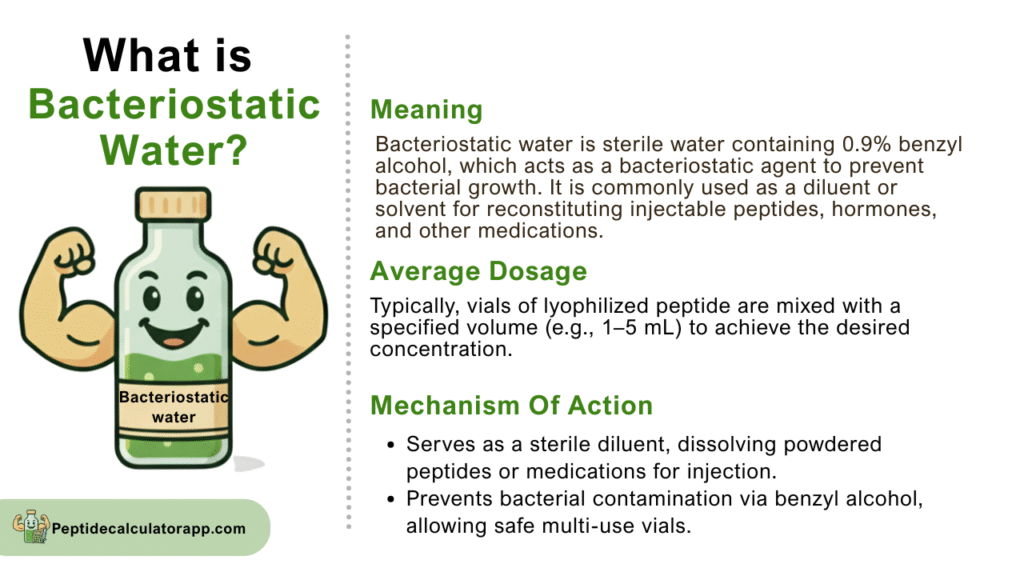
How Bacteriostatic Water Works?
The mechanism of action of bacteriostatic water centers around its benzyl alcohol content. Benzyl alcohol works by disrupting bacterial cell membranes and interfering with bacterial enzyme systems. This preservative doesn’t completely sterilize the solution but rather creates an environment where bacteria cannot multiply effectively.
When benzyl alcohol comes into contact with bacterial cells, it penetrates the cell membrane and interferes with essential metabolic processes. This disruption prevents bacteria from reproducing, effectively maintaining the sterility of the solution over time. The concentration of 0.9% benzyl alcohol is carefully calibrated to provide effective bacteriostatic properties while remaining safe for injection when properly diluted.
The water itself serves as the carrier medium, providing the necessary solvent properties for reconstituting various pharmaceutical compounds. When mixed with lyophilized substances, the bacteriostatic water dissolves the powder, creating a stable solution ready for administration while maintaining its preservative properties.
Benefits of Bacteriostatic Water
Extended Shelf Life
Bacteriostatic water provides a significant advantage over regular sterile water by maintaining usability over several weeks once opened. This extended shelf life reduces waste and lowers costs, allowing healthcare facilities and research laboratories to use the same vial multiple times for frequent reconstitution needs.
Consistent Quality and Safety
The preservative properties of bacteriostatic water help ensure that the solution remains stable and safe throughout its usable life. This is particularly important when working with sensitive or expensive compounds, such as therapeutic peptides like BPC-157, where maintaining solution integrity is essential for effectiveness.
Reduced Risk of Contamination
Bacteriostatic water minimizes the risk of bacterial growth during multiple uses. Its bacteriostatic properties provide an added layer of safety against contamination, making it especially valuable in clinical settings where the same reconstituted medication may be used for multiple patients.
Compatibility with Pharmaceutical Compounds
The solution is highly compatible with a wide range of medications and research compounds. Its neutral pH and minimal additives ensure that it does not interfere with the activity of most compounds, making it a versatile and reliable choice for medical and laboratory applications.
Dosage and Administration
The dosage and administration of bacteriostatic water depend entirely on the specific compound being reconstituted. Bacteriostatic water itself is not administered as a standalone treatment but serves as a diluent for other medications. The volume used for reconstitution varies based on the desired final concentration of the active compound.
For most lyophilized medications, manufacturers provide specific reconstitution instructions indicating the exact volume of bacteriostatic water required. These instructions should always be followed precisely to ensure proper concentration and efficacy of the final solution. Common reconstitution volumes range from 1-10 mL, depending on the compound and intended use.
When preparing solutions, aseptic technique must be maintained throughout the process. This includes using sterile syringes and needles, cleaning vial tops with alcohol, and avoiding contamination of the solution. The reconstituted medication should be gently swirled rather than shaken vigorously to prevent degradation of sensitive compounds.
Administration routes for reconstituted solutions vary based on the specific medication but commonly include subcutaneous, intramuscular, or intravenous injection. The reconstituted solution should be inspected visually for clarity and absence of particulate matter before administration.
Storage and Stability
Proper storage of bacteriostatic water is essential for maintaining its effectiveness and safety. Unopened vials should be stored at room temperature (20-25°C or 68-77°F) in a dry place away from direct sunlight. The product typically has a shelf life of several years when stored under these conditions, as indicated by the expiration date on the vial.
Once opened, bacteriostatic water must be refrigerated at 2-8°C (36-46°F) and used within 28 days. This timeframe ensures the bacteriostatic properties remain effective while preventing potential contamination. It’s crucial to label opened vials with the date of first use to track this 28-day period accurately.
Reconstituted solutions using bacteriostatic water have varying stability periods depending on the specific compound. Some medications remain stable for days or weeks when refrigerated, while others may only be stable for hours at room temperature. Always consult the specific product information or manufacturer guidelines for reconstituted solution stability.
Freezing bacteriostatic water is not recommended as it may alter the preservative’s effectiveness and potentially damage the vial. Similarly, exposure to extreme temperatures should be avoided to maintain product integrity.
Potential Side Effects
Local Irritation
Bacteriostatic water is generally well-tolerated, but mild local reactions may occur due to the benzyl alcohol preservative. Redness, swelling, or slight pain at the injection site are the most commonly reported effects, typically resolving quickly without intervention.
Allergic Reactions
Although rare, some individuals may develop allergic responses to benzyl alcohol. Symptoms can include skin rash, itching, or, in extreme cases, more severe hypersensitivity reactions. It is important for healthcare providers to verify patient allergies before use.
Benzyl Alcohol Toxicity
Excessive exposure to benzyl alcohol can cause toxicity, although this is extremely uncommon with standard use. Special caution is necessary for neonates and infants, as benzyl alcohol can cross the blood-brain barrier and potentially lead to neurological effects. For pediatric patients, preservative-free sterile water is generally preferred.
Risk from Improper Storage or Contamination
While bacteriostatic water contains preservatives to reduce bacterial growth, improper storage or handling can still lead to contamination. This may result in injection site infections or other complications, highlighting the importance of correct storage, handling, and adherence to usage guidelines.
FAQs
Q1. Can bacteriostatic water be used for multiple medications?
Ans: While the same vial can be used multiple times, it should not be used to reconstitute different medications to prevent cross-contamination and drug interactions.
Q2. Is bacteriostatic water the same as saline?
Ans: No, bacteriostatic water contains only water and benzyl alcohol preservative, while saline contains sodium chloride. They serve different purposes and are not interchangeable.
Q3. How long can reconstituted solutions be stored?
Ans: This varies by medication. Some remain stable for weeks when refrigerated, while others must be used within hours. Always consult specific product guidelines.
Q4. What’s the difference between bacteriostatic and bactericidal?
Ans: Bacteriostatic means inhibiting bacterial growth, while bactericidal means killing bacteria. Bacteriostatic water prevents multiplication but doesn’t necessarily kill existing bacteria.
Final Thoughts
Bacteriostatic water represents a crucial component in modern pharmaceutical practice, offering a safe and effective solution for reconstituting various medications and research compounds. Its unique preservative properties provide extended usability while maintaining sterility, making it an invaluable tool for healthcare professionals and researchers.
Understanding proper storage, handling, and administration techniques is essential for maximizing the benefits while minimizing potential risks. As pharmaceutical science continues to advance, bacteriostatic water remains a reliable foundation for preparing injectable medications safely and effectively.
For healthcare providers working with specialized compounds and treatment protocols, bacteriostatic water continues to be an indispensable resource that supports quality patient care and research advancement.