
9-Methyl-β-Carboline is a tricyclic alkaloid belonging to the β-carboline family of compounds. Structurally, it consists of a pyridine ring fused to an indole nucleus, with a methyl group attached at the 9-position. This compound occurs naturally in various plant species and can also be found in small concentrations within the human body as an endogenous metabolite.
The compound was first isolated and characterized in the mid-20th century, and since then, researchers have discovered its presence in numerous biological systems. Unlike synthetic compounds, 9-Methyl-β-Carboline demonstrates remarkable bioavailability and crosses the blood-brain barrier efficiently, making it particularly interesting for neurological applications.
Chemically known as 1-methyl-9H-pyrido[3,4-b]indole, this compound exhibits both hydrophilic and lipophilic properties, allowing it to interact with various biological membranes and receptor systems throughout the body.
How 9-Methyl-β-Carboline Works?
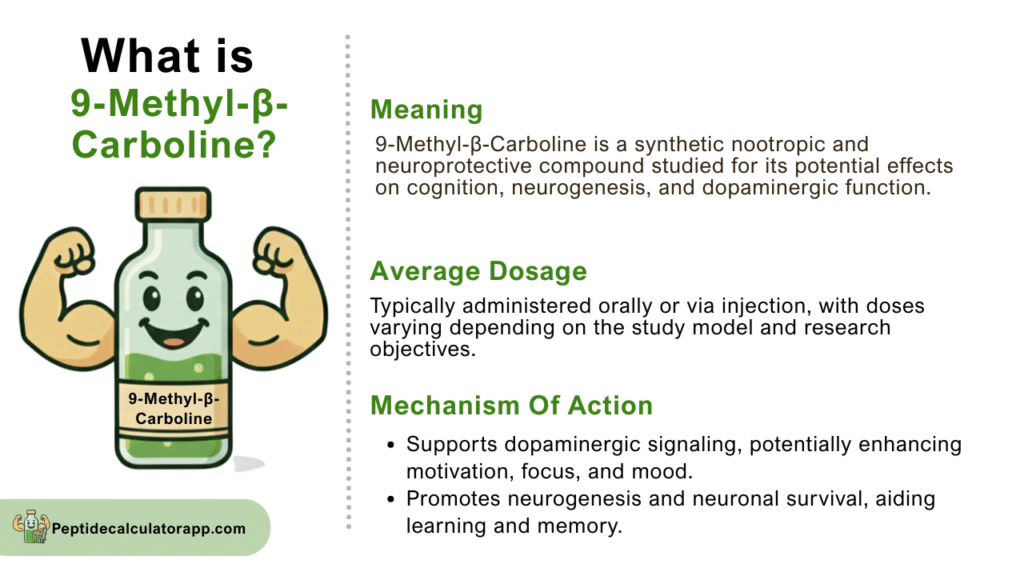
The mechanism of action of 9-Methyl-β-Carboline involves multiple pathways and receptor systems within the central nervous system. Primary research indicates that this compound acts as a partial inverse agonist at benzodiazepine receptors, specifically targeting the GABA-A receptor complex.
At the molecular level, 9-Methyl-β-Carboline binds to the benzodiazepine binding site on GABA-A receptors, but instead of enhancing GABA activity like traditional benzodiazepines, it produces the opposite effect. This inverse agonist activity results in reduced GABAergic inhibition, leading to increased neuronal excitability and enhanced cognitive function.
Additionally, the compound demonstrates significant interaction with monoamine oxidase enzymes, particularly MAO-A and MAO-B. By inhibiting these enzymes, 9-Methyl-β-Carboline can influence the metabolism of important neurotransmitters such as serotonin, dopamine, and norepinephrine, potentially affecting mood, cognition, and overall brain function.
Research has also revealed that this compound may modulate adenosine receptors and influence cyclic adenosine monophosphate (cAMP) signaling pathways, contributing to its diverse physiological effects.
Benefits of 9-Methyl-β-Carboline
Cognitive Enhancement
9-Methyl-β-Carboline has shown potential to improve memory formation, attention, and learning capacity. Its modulation of GABA receptors and influence on neuronal excitability may underlie these cognitive benefits, supporting improved mental performance.
Neuroprotective Properties
Preclinical studies suggest that 9-Methyl-β-Carboline may protect neurons from oxidative stress and age-related damage. This neuroprotective effect makes it a compound of interest in research on neurodegenerative conditions.
Mood Regulation
The compound may influence mood and emotional stability through its interactions with monoamine oxidase enzymes and neurotransmitter systems. While promising, further research is needed to fully understand these effects in humans.
Anti-Anxiety Effects
Some studies indicate that 9-Methyl-β-Carboline may exert anxiolytic effects despite its inverse agonist activity at benzodiazepine receptors. These effects are thought to occur via alternative neural pathways, though more evidence is required to confirm this benefit.
Dosage and Administration
Currently, there are no established clinical dosing guidelines for 9-Methyl-β-Carboline due to limited human studies. Most research has been conducted in laboratory settings using animal models or in vitro systems.
In experimental settings, researchers have used dosages ranging from 0.1 mg/kg to 10 mg/kg body weight, depending on the specific study objectives and administration route. However, these experimental dosages should not be considered recommendations for human use.
The compound can be administered through various routes, including oral, intraperitoneal, and intravenous methods in research settings. Oral bioavailability appears to be moderate, with the compound showing good absorption through the gastrointestinal tract.
Given the lack of human clinical data, individuals interested in this compound should consult with qualified healthcare professionals and await further research before considering any form of supplementation or therapeutic use.
Storage and Stability
9-Methyl-β-Carboline demonstrates relatively good stability under proper storage conditions. The compound should be stored in a cool, dry environment away from direct light and heat sources to maintain its molecular integrity.
Optimal storage temperature ranges from 2°C to 8°C (36°F to 46°F), though the compound remains stable at room temperature for short periods. Long-term storage requires refrigeration or freezing conditions to prevent degradation.
The compound is sensitive to oxidation and should be stored in an inert atmosphere when possible. Moisture can also affect stability, making desiccant storage conditions preferable for maintaining compound purity over extended periods.
Solutions of 9-Methyl-β-Carboline should be prepared fresh when needed, as aqueous solutions may show decreased stability compared to the dry compound. pH levels can significantly impact solution stability, with neutral to slightly acidic conditions generally preferred.
Potential Side Effects
Central Nervous System Effects
9-Methyl-β-Carboline may increase neuronal excitability, potentially causing restlessness, heightened alertness, or anxiety in sensitive individuals. Higher doses have been associated with tremor-like effects in preclinical studies.
Cardiovascular Considerations
Animal studies suggest that the compound could influence heart rate and blood pressure, with these effects likely being dose-dependent. Careful monitoring is advised, especially in individuals with pre-existing cardiovascular conditions.
Drug Interactions
Due to its monoamine oxidase (MAO) inhibitory activity, 9-Methyl-β-Carboline may interact with medications affecting neurotransmitter systems, including antidepressants, stimulants, and other psychoactive compounds. Such interactions could enhance or alter the effects of these drugs.
Tolerance and Dependence
Its interaction with benzodiazepine receptors raises theoretical concerns about tolerance development or withdrawal effects. Further research is needed to determine the long-term implications of repeated use.
Individual Sensitivity
Responses to 9-Methyl-β-Carboline can vary widely. Some individuals may experience effects at lower doses than others, making careful monitoring and gradual dose adjustment essential. As with any potent bioactive compound, evaluating the risk-benefit profile is crucial before use.
FAQs
Q1. Is 9-Methyl-β-Carboline legal?
Ans: The legal status varies by jurisdiction, but it is generally not approved for human consumption as a supplement or medication. It remains primarily a research compound.
Q2. How does it differ from other β-carbolines?
Ans: The methyl group at position 9 significantly alters its pharmacological properties compared to other β-carboline compounds, particularly regarding receptor binding affinity and selectivity.
Q3. Can it be found naturally in foods?
Ans: Yes, trace amounts occur naturally in certain fermented foods and some plant species, though concentrations are typically very low.
Q4. What makes it different from benzodiazepines?
Ans: While it binds to benzodiazepine receptors, it acts as an inverse agonist rather than an agonist, producing opposite effects to traditional benzodiazepine medications.
Final Thoughts
9-Methyl-β-Carboline represents a compelling compound within neuropharmacological research, offering unique insights into GABA receptor function and potential therapeutic applications. Its distinctive mechanism of action as an inverse agonist at benzodiazepine receptors sets it apart from conventional compounds in this space.
While preliminary research suggests promising applications in cognitive enhancement and neuroprotection, the field requires substantial additional investigation before any therapeutic claims can be substantiated. The compound’s complex pharmacology and potential for drug interactions necessitate careful, controlled research approaches.
Future research directions should focus on comprehensive safety profiling, dose-response relationships, and well-designed human clinical trials to establish both efficacy and safety parameters. Until such data becomes available, 9-Methyl-β-Carboline should remain strictly within research environments under appropriate scientific oversight.
The scientific community’s continued interest in this compound reflects its potential significance in understanding brain function and developing novel therapeutic approaches for neurological and psychiatric conditions.